Australian developer Li-S Energy has delivered its lithium-sulfur battery cells to the US Army in Maryland for independent testing on military drones.
The battery cells arrived at Aberdeen Proving Ground for evaluation by the DEVCOM C5ISR Center to determine whether the technology can power unmanned aerial vehicles, ground robots, and other military hardware.
The primary operational advantage of the chemistry lies in weight reduction, with Li-S Energy stating that its technology approaches double the energy density per kilogram of conventional lithium-ion batteries.
Lithium-sulfur batteries replace heavy nickel and cobalt cathodes with lightweight sulfur, offering higher theoretical storage capacity while reducing material costs. Aberdeen Proving Ground, established in 1917, serves as the primary testing location for military equipment evaluated by the US Army Combat Capabilities Development Command C5ISR Center.
Higher energy density allows military hardware to store additional power without causing a proportional increase in total equipment weight.
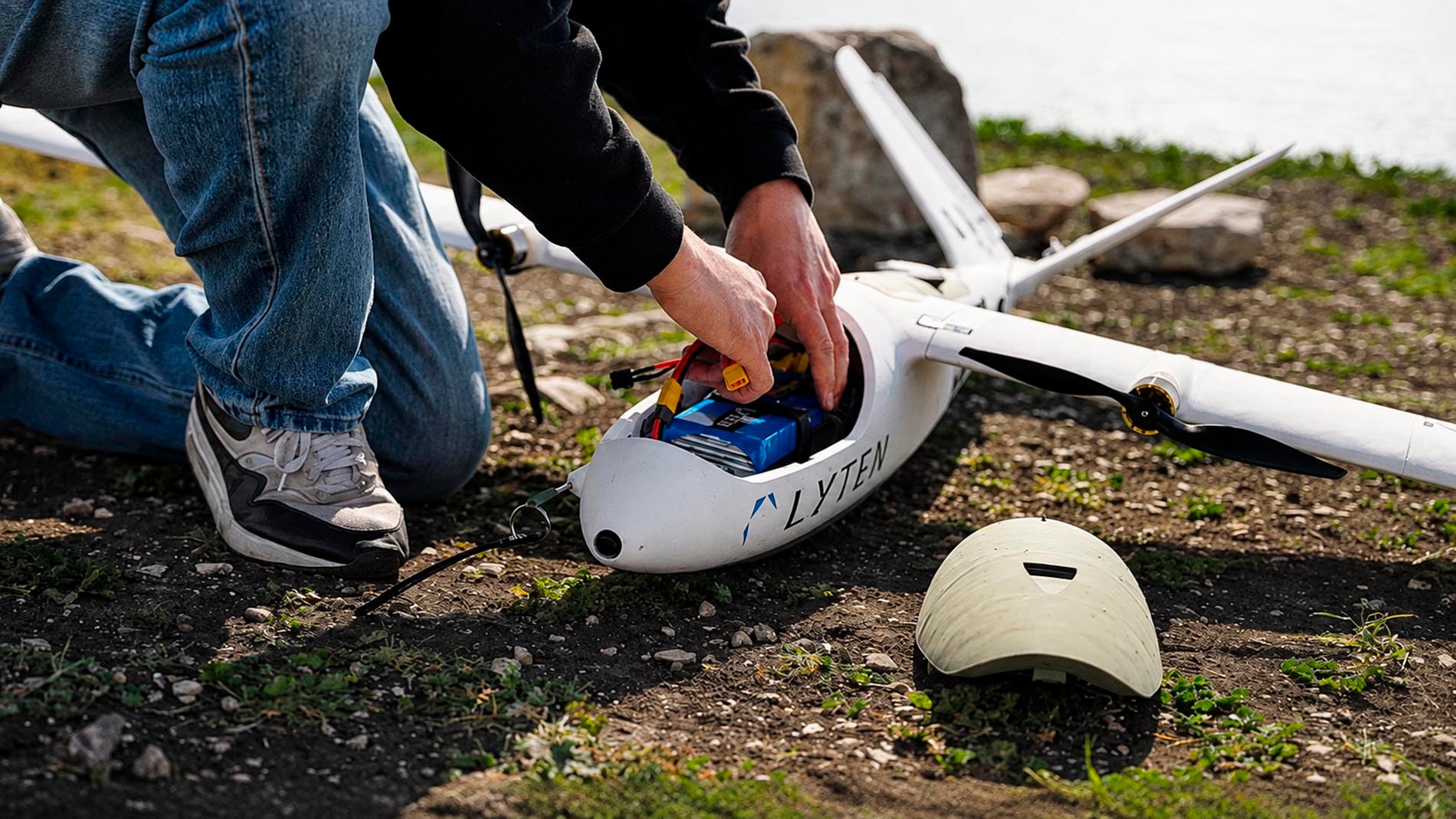
While higher battery density in commercial mobile phones extends operating time between charges, military drones gain expanded capabilities such as flying for longer periods, reaching greater distances, or carrying heavier payloads including sensors.
Battery performance and chemistry challenges
Li-S Energy reported that its current battery models deliver approximately 456 watt-hours per kilogram following initial charge and discharge cycles.
The company is using proprietary materials to improve cell stability and resistance, targeting a historical weakness of lithium-sulfur chemistry, which traditionally suffers from rapid performance degradation over repeated charge cycles.
Rechargeable lithium-sulfur cells have long faced chemical degradation caused by the dissolution of polysulfides into the liquid electrolyte, which shortens overall battery operational lifespan compared to traditional lithium-ion alternatives.
Lithium-sulfur technology has attracted widespread international interest from defense developers, with Chinese manufacturers also promoting experimental cells that promise to double drone flight times while enduring 800 charge cycles.
Existing trials and commercial partnerships
The delivery to the military follows several existing testing programs established by Li-S Energy across maritime, aerospace, and defense applications.
Praetorian Aeronautics is currently evaluating the lithium-sulfur cells for integration into its Dagger interceptor drone, while defense contractor MSubs is conducting tests for unmanned underwater vehicles.
Kea Aerospace is also testing the technology to power high-altitude solar aircraft designed to remain airborne for extended periods.
High-altitude long-endurance aircraft operate in the stratosphere to provide continuous surveillance and communications coverage, requiring lightweight power systems capable of storing solar energy generated during daylight hours.
Transport permits and evaluation terms
Before shipping the cells, Li-S Energy had to obtain specialized air transport permits from regulatory authorities in both Australia and the United States.
The company is currently pursuing formal aviation certification to enable the transportation of larger battery quantities for future testing phases.
The initial delivery to DEVCOM C5ISR does not represent a commercial purchase, and no agreement exists regarding unit pricing or dates for operational adoption.
Instead, the trial serves as an independent performance evaluation that may lead to procurement contracts if the cells satisfy Army standards for power, safety, and operational reliability.
Alternative power technologies and next steps
Military efforts to extend drone operating ranges extend beyond chemical battery developments, with US defense researchers also testing airborne laser power transmission systems to recharge drones during flight.
Li-S Energy must now demonstrate that its performance metrics hold up under practical field conditions outside laboratory environments.
If the testing succeeds, doubling available battery energy at equal weight could provide critical operational advantages for autonomous systems during active missions.