Germany announced plans on Friday to establish a joint drone defense force among Baltic Sea nations to combat escalating hybrid warfare threats across Europe.
German Interior Minister Alexander Dobrindt confirmed the initiative, which aims to facilitate rapid intelligence sharing and coordinated responses to unconventional security challenges.
Dobrindt warned that foreign powers are attempting daily to undermine the democracy, security, and economic strength of Europe, adding that the threat could acquire a new dimension in the coming months.
The announcement follows a series of high-profile security incidents across the continent that have raised concerns over whether gray zone operations are escalating toward open military confrontation.
Security Alarms at Leipzig Airport
Recent security scares in Germany centered on Leipzig/Halle airport, a major freight transport hub in eastern Germany that is also utilized for military supply shipments to Ukraine.
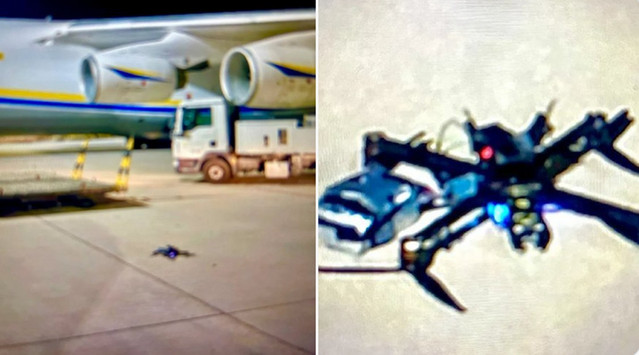
On August 4, security personnel discovered a drone loaded with explosives positioned near an Antonov transport aircraft operated by Ukraine for military transport flights.
German investigators are also examining whether a second drone collided with a cargo plane operated by international courier service DHL at the same facility.
Approximately ten days after the first discovery, authorities located a third drone at the airport alongside roughly 50 grams of a substance identified as military-grade RDX, also known as hexogen.
German Chancellor Friedrich Merz stated that domestic authorities were nearing the conclusion of their investigation into who orchestrated the airport plot.
While Berlin has not officially attributed responsibility to Moscow, German media outlets cited security sources examining potential involvement by Russian intelligence services. Moscow has categorically denied any connection to the incidents.
Explosive Vessel in the Black Sea
Maritime security concerns escalated days later in the Black Sea, where Romanian military forces detected an unmanned surface vessel operating within a few hundred meters of the Neptun Deep offshore gas field.
The Neptun Deep project, located off the Romanian coast, is a major natural gas field expected to make Romania the largest natural gas producer in the European Union.
Romanian authorities mobilized military units after identifying explosives aboard the unmanned craft, which was subsequently destroyed. The event followed two previous drone discoveries in the same maritime area.
Romania has faced recurring security pressures due to the nearby war in Ukraine, including repeated airspace violations and sea mines drifting across the Black Sea.
Officials noted that caution remains necessary regarding attribution, as no public technical investigation has yet conclusively established the origin of the sea vessel.
Assassination Plots Target Industry Leaders
The heightened state of alert reflects concerns that trace back to 2024, when US intelligence agencies uncovered an alleged Russian plot to assassinate Armin Papperger, chief executive of German defense contractor Rheinmetall.
Rheinmetall is one of Europe's primary manufacturers of artillery ammunition and military equipment supplied to Ukrainian armed forces.
American officials alerted German security services to the plot, prompting authorities to significantly step up security protocols surrounding Papperger.
The targeting of Papperger was viewed by security analysts as part of a broader alleged campaign aimed at intimidating European defense executives supporting Kyiv.
Camille Grand, former NATO deputy secretary general and current head of the European Aerospace, Security and Defence Industries Association, indicated that defense industry executives across Europe have substantially increased their personal security measures in response.
Escalation of Gray Zone Tactics
European security agencies have tracked a marked expansion in non-conventional operations since Russia launched its full-scale invasion of Ukraine in 2022.
Investigators across multiple nations have examined instances of subsea cable and pipeline sabotage, cyberattacks targeting state agencies and energy providers, arson, parcel bombs, satellite GPS jamming, disinformation campaigns, airspace breaches, and efforts to recruit criminal networks for local sabotage.
The European External Action Service, the diplomatic arm of the European Union, now explicitly categorizes subsea infrastructure damage, incendiary devices placed on aircraft, airspace violations, and assassination attempts as hybrid activities forming a pattern of aggressive Russian behavior.
The EU defines hybrid threats as coordinated combinations of coercive, subversive, conventional, and unconventional methods designed to achieve strategic goals while remaining below the threshold of declared war.
Debating the Limits of Hybrid Warfare
The primary strategic advantage of hybrid tactics lies in deliberate ambiguity, which allows a state actor to apply sustained pressure without providing a clear event that would justify a formal military response.
Examples include drones appearing at logistics hubs without immediate proof of origin, damaged undersea cables initially attributed to accidents, or arson committed by local criminals recruited online without knowing their ultimate employer.
Speaking to Politico, Camille Grand observed that Europe is engaged in a hybrid war that is no longer so hybrid, warning against a process akin to a frog being boiled slowly.
Grand cautioned that shocking incidents risk becoming normalized over time, allowing the level of confrontation to rise dramatically without Europe ever identifying a specific red line being crossed.
NATO Collective Defense and Diplomatic Contacts
Military experts emphasize that labeling an attack as hybrid does not automatically preclude a conventional military response from NATO.
NATO policy explicitly specifies that a severe cyberattack or hybrid action may be classified as an armed attack, potentially triggering Article 5, the alliance's collective defense clause. Such decisions are evaluated on a case-by-case basis depending on scale and consequences.
Amid the rising tension, CIA Director John Ratcliffe made an unusual visit to Moscow this week to meet with Sergey Naryshkin, head of Russia's Foreign Intelligence Service.
Russian officials described the meeting as a working session without detailing the discussion. However, sources reported by Reuters indicated that Ratcliffe raised the possibility of Russian operations against NATO member states.
US President Donald Trump downplayed the significance of the Moscow meeting, stating that Russian President Vladimir Putin would not attack NATO territory.
Despite the absence of formal war declarations or conventional troop crossings into Poland or Germany, security analysts warn that the narrowing gap between gray zone harassment and open military crisis presents an ongoing risk of accidental escalation.