Clay materials inside earthquake faults can flow almost like water during major tremors, according to a Japanese study led by Professor Tetsuro Hirono.
The researchers from Osaka Metropolitan University found that extreme friction generated during a rupture rapidly heats trapped groundwater, causing fault rock to lose its strength and slide over unusually large distances.
The findings, published in the scientific journal Scientific Reports, offer fresh insights into the geological processes that trigger tsunamis by causing sudden, massive displacements of the ocean floor.
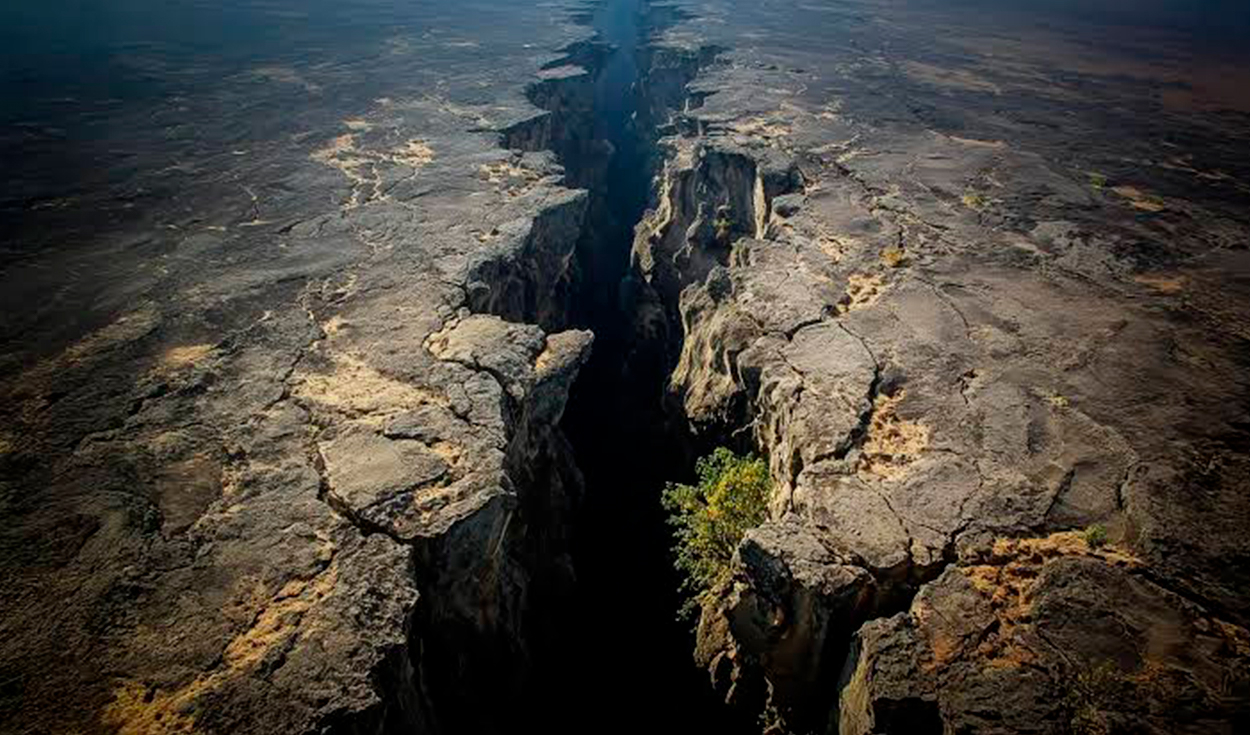
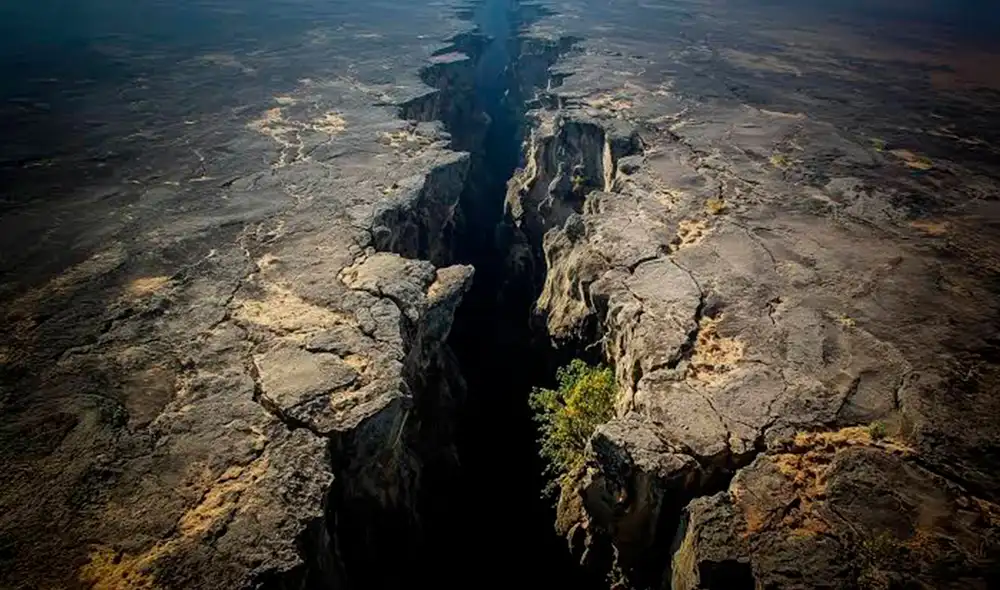
Geological faults are fractures in the Earth's crust where vast blocks of rock push against each other along tectonic plate boundaries. Over decades or centuries, tectonic forces cause stress to build up along these contact surfaces. When the friction holding the rocks in place is finally overcome, the crust breaks suddenly, releasing seismic energy in the form of ground shaking.
Japan sits atop the intersection of multiple tectonic plates along the Pacific Ring of Fire, a horseshoe-shaped belt around the rim of the Pacific Ocean where most of the world's earthquakes and volcanic eruptions take place. Because the island nation faces continuous seismic activity, researchers have long sought to understand why certain undersea tremors cause fault surfaces to slip much farther than standard physical models predict.
Evidence from ancient Boso rocks
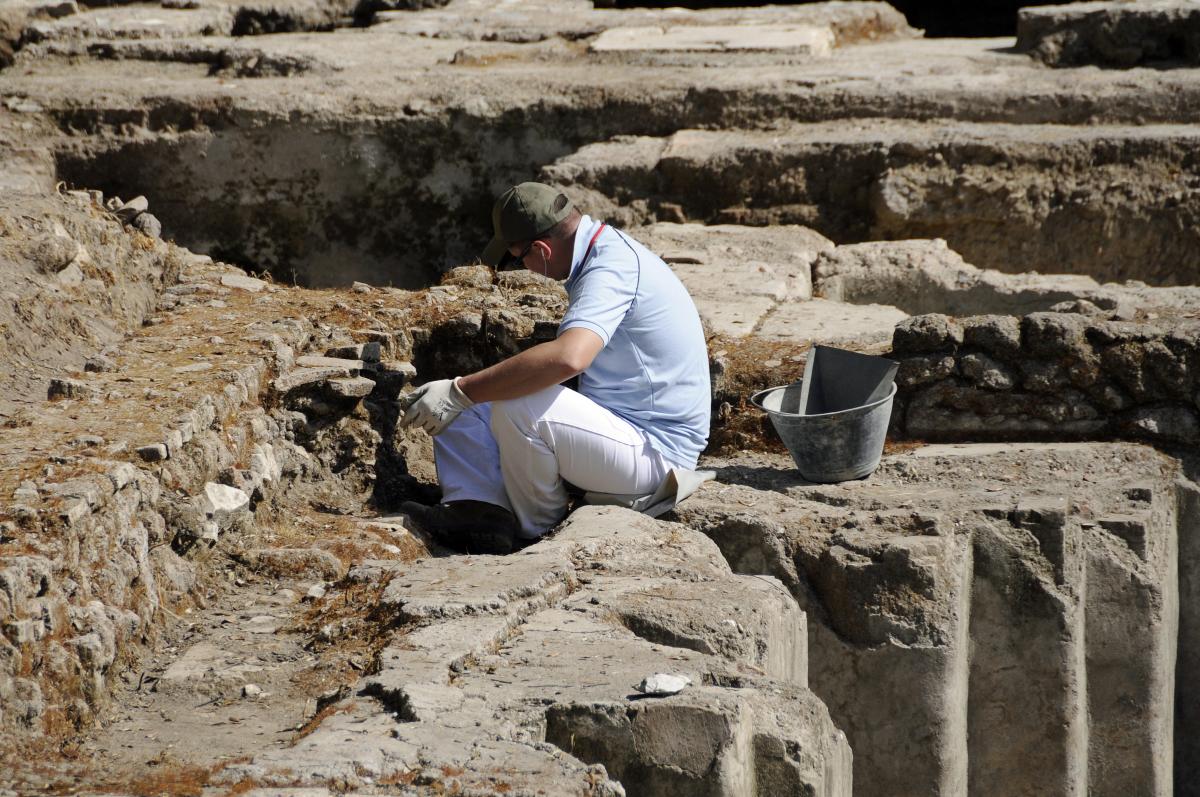
To investigate how fault rocks behave during powerful seismic ruptures, the research team examined ancient rock formations preserved on the Boso Peninsula in eastern Japan.
The examined strata formed approximately 15 million years ago in a deep submarine environment before geological uplift exposed them on land. When scientists analysed the interior of the ancient fault zone, they identified distinct wavy layers, curved structural features, and intricate swirling patterns preserved within the rock.
These geological formations closely resemble the patterns that typically emerge when materials are subjected to the movement of flowing fluids. In typical solid rock fractures, shearing forces produce clean breaks or pulverized powdery gouge, but the Boso samples displayed structures indicative of liquid-like churning.
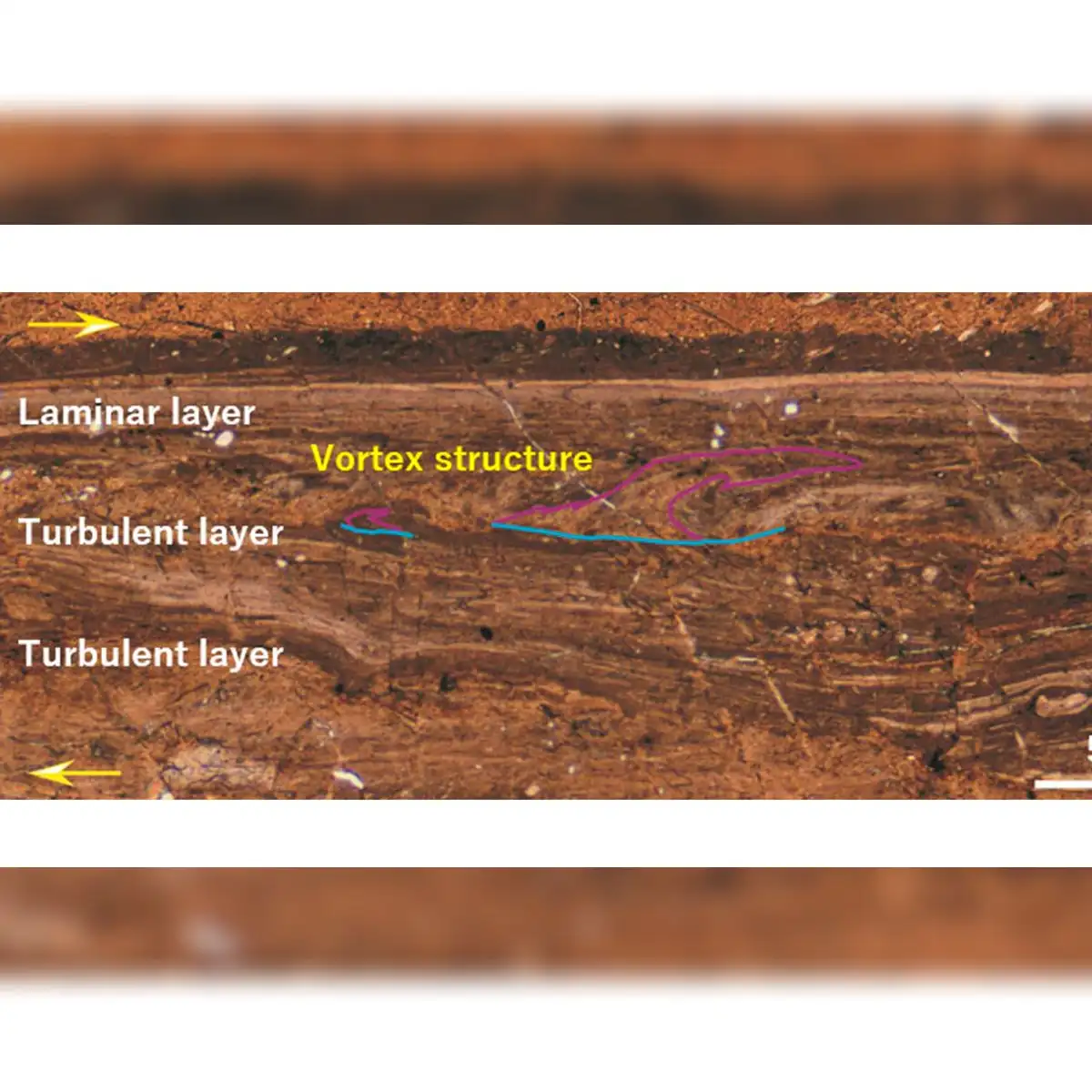
The researchers described the preserved features as physical structures similar to turbulent flow. Using fluid dynamics analysis, the team determined that these swirling patterns represent the physical footprint of thermal pressurization, a transient phenomenon capable of fundamentally altering how geological materials behave during a rupture.
Thermal pressurization and fluid dynamics
Thermal pressurization begins in the opening moments of an earthquake when two opposing rock walls slide rapidly past each other. The intense kinetic friction between the moving surfaces generates immense quantities of heat within fractions of a second.
This sudden surge in temperature rapidly heats water trapped inside microscopic pores and clay minerals within the narrow fault zone. As the liquid heats up, it expands forcefully. Because surrounding dense rock prevents the water from escaping quickly, fluid pressure inside the fault spikes dramatically.
The rising fluid pressure effectively pushes the two rock walls apart, counteracting the heavy downward weight of the overlying crust. As the clamping force between the surfaces drops, the clay materials trapped between the rocks lose almost all of their mechanical resistance.
This abrupt breakdown in shear strength allows the fault walls to slide past one another with minimal resistance.
Viscosity approaching water
Laboratory and mathematical analyses carried out by the team revealed the extreme extent of this physical transformation.
Hirono explained that their analysis suggested the viscosity of the fault material dropped to a level approaching that of water. He said this shift represented a drastic reduction in resistance, noting that the fluidised state acted as dynamic lubrication that caused significant weakening along the fault plane.
Clay minerals are common within subduction zones and fault zones around the globe. Under normal geological conditions, clay acts as a pliable but solid barrier. However, when combined with high fluid pressure and thermal heating, water-bearing clay layers can liquefy temporarily, turning what would normally be a high-friction barrier into a frictionless slide.
Implications for undersea tsunamis
The weakening of a fault zone has direct consequences for the scale of marine disasters. When a fault loses its resistance, rock masses can slide over much greater distances, including in shallow sections situated close to the sea floor.
Such large, sudden displacements heave huge volumes of ocean water upward or sideways. As the displaced water attempts to regain equilibrium under gravity, it creates powerful tsunami waves that can travel thousands of miles across open ocean basins at passenger-jet speeds before striking coastal communities.
A devastating demonstration of massive seabed displacement occurred in March 2011, when a magnitude 9.1 earthquake struck eastern Japan. The tremor shook the region for nearly six minutes and triggered a cataclysmic tsunami that claimed thousands of lives and caused widespread destruction along the Japanese coastline.
The researchers noted, however, that their analysis of the 15-million-year-old rock formations does not prove that thermal pressurization occurred during the 2011 disaster. Instead, the study provides concrete geological evidence that fault rocks possess the physical capacity to undergo this fluid-like state under specific natural conditions.
Assessing modern earthquake hazards
Following their findings in the ancient Boso rocks, the scientists plan to apply their analytical methodology to active modern fault systems. By examining how contemporary faults might respond to rapid heating, the team hopes to calculate with greater precision how far rock surfaces could slip during future earthquakes.
Hirono concluded that understanding viscosity changes during fault slip could allow researchers to recognize the magnitude of these movements with far greater precision, which would contribute directly to tsunami mitigation efforts.
By uncovering the hidden fluid mechanics recorded in ancient Japanese stone, the researchers believe geologists can better evaluate the true hazards that active seismic zones pose to vulnerable coastal populations worldwide.