The head of the Dominican Republic's mining chamber has called for territorial exclusions to be written into the upcoming Mining Law reform to ensure lasting environmental protection.
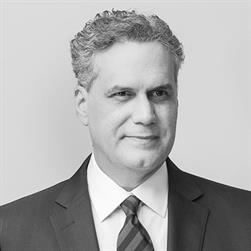
Martín Valerio Jiminián, executive director of the Chamber of Mining and Petroleum, said the government should base any general territorial prohibitions on competent legal instruments and technical studies, rather than relying on ministerial communications or presidential decrees.
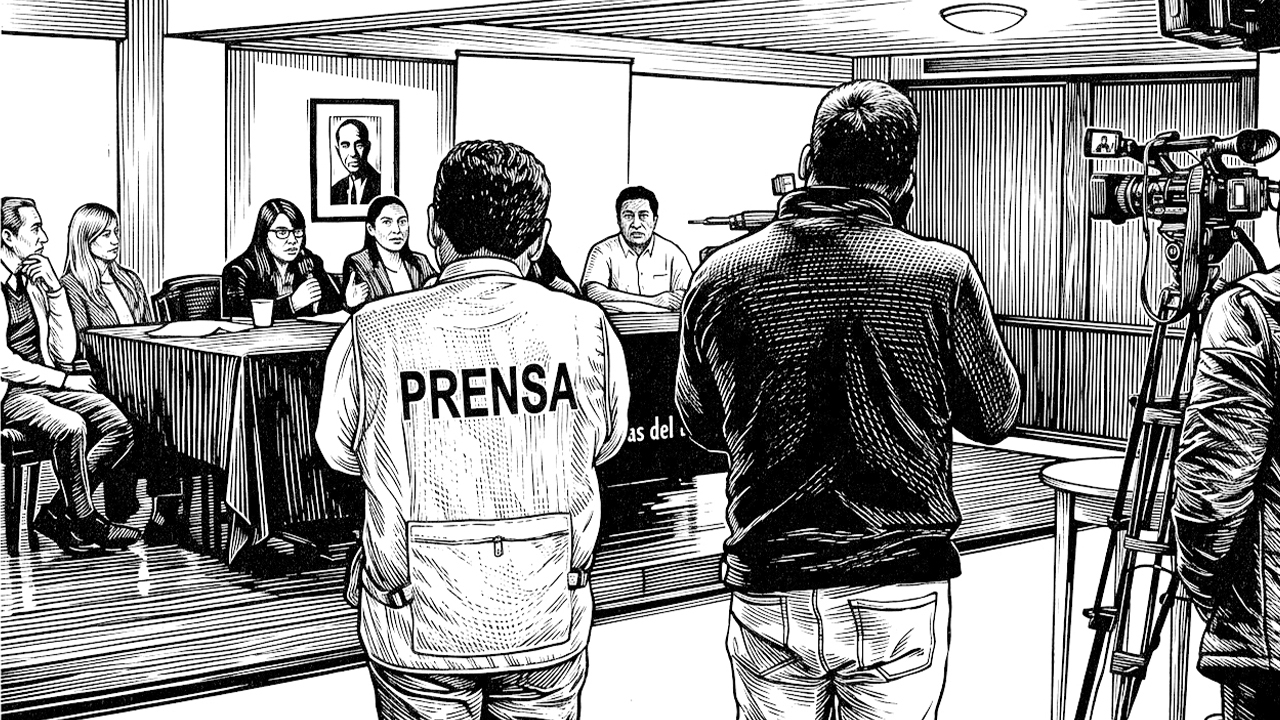
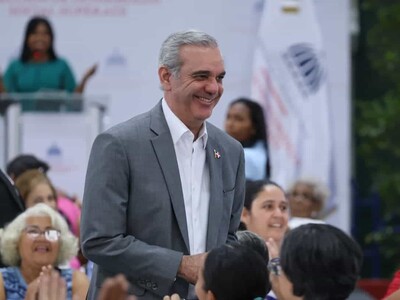
His comments follow a meeting at the National Palace between Dominican President Luis Abinader and priests, peasant leaders and social representatives concerned about the future of the Cordillera Septentrional.

During the meeting, the president said there was no intention to carry out mining exploitation in the mountain range. He presented a communication from the Ministry of Energy and Mines to support the position.
Community representatives, however, asked for a more specific document declaring the zone free of exploration, exploitation and material extraction.
Valerio Jiminián said the community's request was legitimate, but required an institutional response that was legally correct and technically supported, rather than just a political declaration.
He said when a community fears for its water sources, mountains or way of life, the state should not respond with indifference or technical arrogance, but must listen, inform and dialogue.
He said governing through ambiguities, such as indefinitely open files, imprecise communications and promises without a defined legal scope, does not protect the mountain range or calm communities, but only postpones uncertainty.
Constitutional balance
The Dominican Constitution imposes a duty on the state to prevent pollution, protect the environment and guarantee the sustainable use of natural resources. Valerio Jiminián said this obligation is not decorative and cannot be subordinated to economic considerations.
The Constitution also protects free enterprise and acquired rights according to the law. It requires the public administration to act with objectivity, transparency and full submission to the legal system, using regular procedures that guarantee a hearing for interested persons.
Valerio Jiminián said this balance must be preserved, representing two sides of the same legality rather than competing mandates.
He said citizens have the right to organise, request information, demand environmental studies and question state actions, including in the courts.
Legal security is not an exclusive demand of companies, he said, but also protects citizens from state arbitrariness. He said it prevents an authority from changing promises without explanation, obliges the application of norms and environmental studies, and sanctions breaches, making it an ally of both the environment and investment.
Valle Nuevo precedent
Valerio Jiminián pointed to a 2017 Constitutional Court case, ruling TC/0021/17, regarding the possible installation of a sawmill in the Valle Nuevo National Park.
The court upheld a preventive amparo presented by citizens and ordered the activity to be blocked, stating it was not necessary to wait for the damage to be done. The court found a real and imminent risk to a protected area was sufficient for constitutional protection.
Rather than relying solely on documents provided by the parties, a commission of magistrates, the protected area administrator and a forestry expert appointed by the Academy of Sciences visited the national park to verify the risk on site.
Valerio Jiminián said this rigor and verified technical evidence should be emulated in any decision regarding the Cordillera Septentrional.
He said rights should not depend on who mobilizes more people or is closer to power. In the Valle Nuevo case, he said the balance was tipped by technical reports documenting the ecosystem risk, not just public pressure.
Mining Law reform
Valerio Jiminián said a ministerial communication cannot declare a mountain range protected. He cited a 2018 Constitutional Court ruling, TC/0601/18, that annulled a Ministry of Energy and Mines resolution attempting to establish a new concession regime.
That annulled resolution would have reduced the maximum exploitation period from 75 to 25 years and the maximum area from 20,000 to 5,000 hectares. The court ruled the ministry lacked the authority to make the change alone, stating the power belonged to the president by decree, and the ministry could only propose it.
The court abstained from ruling on whether the ministry complied with prior public consultation, deeming it a matter of mere legality outside concentrated constitutional control, and sent the matter to the contentious administrative jurisdiction.
Valerio Jiminián said the lesson is that the hierarchy of sources matters, and a ministry cannot grant itself normative power reserved for the president or the legislature.
He said if the objective is to give the Cordillera Septentrional, or any other area, protection that resists the passage of time and changes in government, the most solid channel is the law itself. A territorial exclusion incorporated into the reformed Mining Law, supported by technical delimitation and studies, would have a normative force that no administrative communication could equal, he said.
Any decision must be based on clear distinctions between exploration and exploitation, protected and unprotected areas, and an administrative communication versus an instrument with true legal effect, he said.
Technical spaces
The Chamber of Mining and Petroleum executive said the state should examine pending requests and reject those incompatible with environmental protection through a motivated resolution. He said any general territorial prohibition should be adopted through the competent legal instrument, ideally using the ongoing legal reform.
He said the conversation at the National Palace could show that social participation and legal security are complementary.
The most constructive path, he said, is to gather available information, identify environmentally sensitive areas, make existing requests transparent and open technical spaces for participation before decisions are made, rather than after a conflict has started.
In this process, he said the president must listen, communities must participate, technicians must study, institutions must decide within reasonable timeframes, and courts must control legality when necessary.
He said this represents the democratic order followed by the Constitutional Court, both through amparo to address fundamental rights threats and direct action of unconstitutionality to purge poorly authorized norms.
A mountain is not protected by weakening the law, he said, but by making the law work.