Magín Díaz, the Dominican Republic's Minister of Finance and Economy, defended on Tuesday the government's fuel subsidies against recommendations from the International Monetary Fund (IMF) to cut back the aid and ensure compliance with the country's fiscal rule.
Díaz said the Executive Branch has tried to strike a balance between passing on rising international oil prices to local consumers and preventing those increases from hitting households all at once.
He warned that removing the subsidies abruptly would have consequences for transport and for the prices of goods, given how heavily fuel costs weigh on the broader economy.
For that reason, Díaz said, the government chose to apply gradual price increases while keeping the aid in place, particularly for diesel, which he described as the fuel most widely used in transport and in farming and livestock activities.
The IMF is a Washington-based international institution that monitors the economic policies of its member countries and regularly reviews the Dominican Republic's public finances, including its fiscal rule, the legal framework that sets limits on government spending and debt.
Subsidy spending figures
Asked about the size of the subsidies, Díaz said that over a 15-week period the government spent an average of RD$1,500 million. He added that in more recent weeks, that figure has fallen to around RD$900 million.
Economic performance cited
The minister also defended the performance of the Dominican economy amid what he described as an international crisis. He said the country has grown by more than 4.5%, that the peso has appreciated, that international reserves remain at a healthy level, and that public investment has not declined.
Targeting aid to those most in need
On the possibility of better targeting the aid, Díaz said that multidimensional poverty statistics presented during a workshop for journalists would help the government more accurately identify people who need state assistance and distribute resources with greater precision.
Díaz said what you never want is for someone who is poor to be left without access to assistance, explaining the importance of having tools that improve how beneficiaries are selected.
Electricity subsidy and distributor losses
Díaz also addressed the electricity subsidy, which makes up a significant share of government spending. He acknowledged that losses at the country's electricity distribution companies remain a problem, but said the Dominican Republic has made progress in power generation through a matrix that combines coal, gas and renewable energy.
He said the government is working with the World Bank and the Inter-American Development Bank on projects to improve the management of the distribution companies and reduce their losses. Several of those projects have already been awarded, and Díaz said they are expected to start showing results next year.
What happens next
Díaz said projects with the World Bank and the Inter-American Development Bank aimed at improving management of electricity distributors and reducing their losses are expected to start showing results next year.
Test yourself
What did Magín Díaz defend against IMF recommendations?
According to Díaz, how much did the subsidy average over 15 weeks, and what has it fallen to recently?
What growth rate did Díaz cite for the Dominican economy?
Have your say
Should governments keep fuel subsidies in place during periods of rising international oil prices?
Where it happened
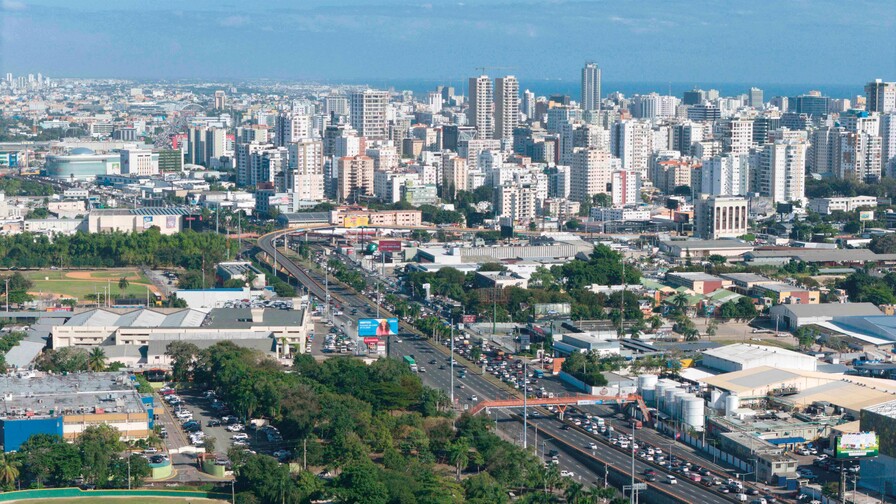
Santo Domingo, Dominican Republic