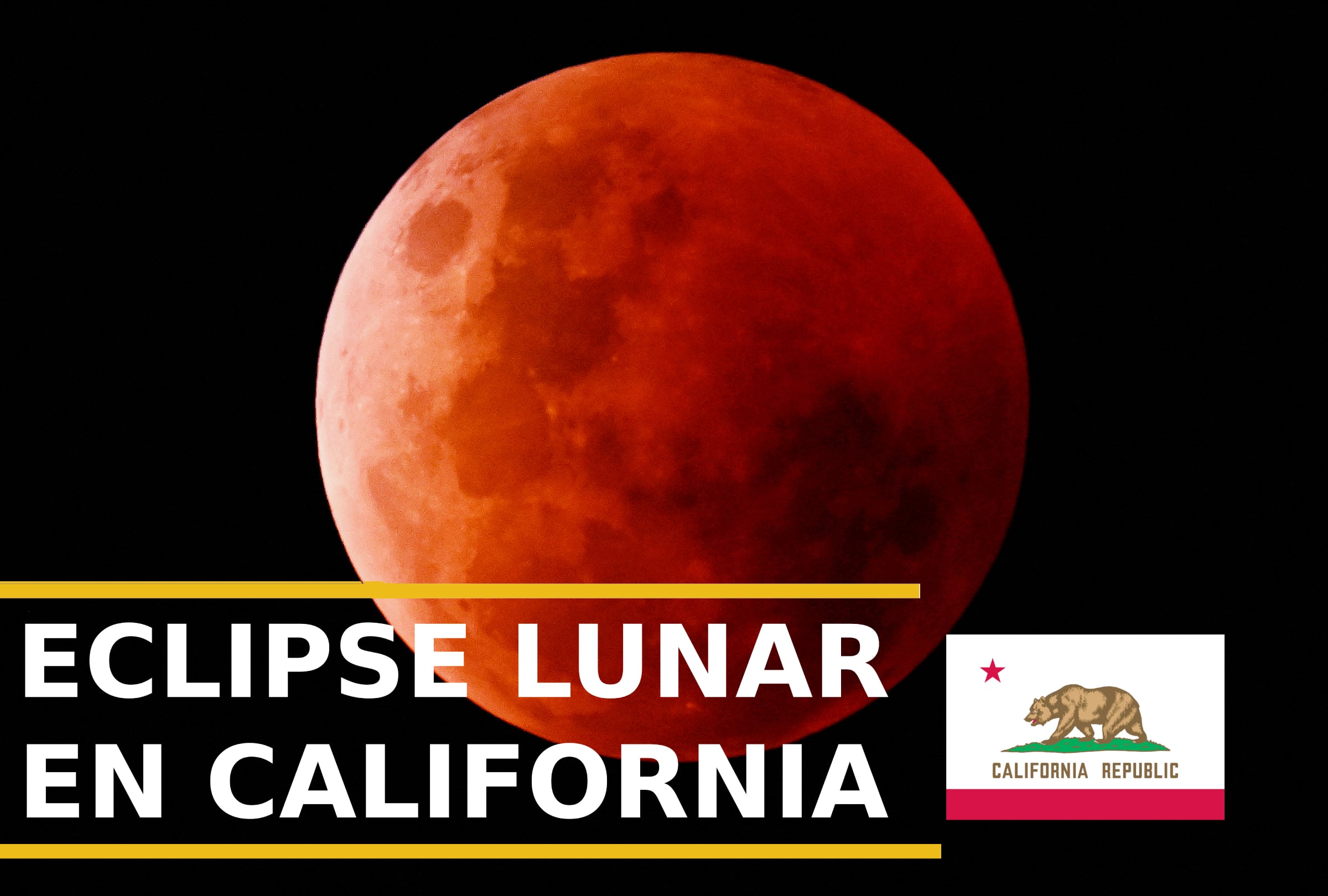
California will serve as one of the prime viewing locations in the United States for a deep partial lunar eclipse on Thursday, August 27, 2026, when Earth shadow covers 96 percent of the Moon.
The maximum point of the celestial event arrives at 9:13 p.m. Pacific Daylight Time. At that moment, nearly the entire lunar disk will sit inside Earth's darkest shadow, known as the umbra, creating a visual effect close to a total eclipse.
Although technically classified as a partial eclipse, the Moon may take on a reddish or coppery tone during peak coverage. A tiny fraction of the lunar surface remaining outside the umbra will continue to receive direct sunlight, giving the event a distinct appearance compared to complete totality.
A lunar eclipse takes place when the Earth passes directly between the Sun and the Moon, casting a planet-sized shadow into space. As sunlight filters through Earth's atmosphere, blue light scatters while longer red wavelengths refract onto the lunar surface, often referred to popularly as a Blood Moon.
California residents enjoy a clear advantage because the peak phase occurs during comfortable evening hours shortly after sunset. Across the state, astronomical centers and public observatories plan special viewing activities, while regions with clear skies provide prime opportunities for individual observers.
Eclipse Schedule and Timing for California
The astronomical event begins on the evening of Thursday, August 27, 2026, and extends into the early hours of Friday, August 28.
The initial penumbral phase starts at 6:24 p.m. PDT, though the Moon will remain very low or below the horizon in parts of northern California at that time. The eclipse becomes far more noticeable once the Moon rises and the partial phase begins at 7:34 p.m. PDT.
The peak of the eclipse occurs at 9:13 p.m. PDT, marking the moment when 96 percent of the Moon enters the umbra shadow. The partial phase officially ends at 10:52 p.m. PDT as the Moon exits the shadow, and the final penumbral phase finishes after midnight.
Astronomers recommend the window between 8:15 p.m. PDT and 10:00 p.m. PDT as the most rewarding viewing time. During these hours, a substantial portion of the lunar surface remains covered, making shifts in color and brightness easily visible to observers.
Viewing Events in Los Angeles
Los Angeles offers one of the best observation vantage points in California. The Moon rises in Los Angeles at approximately 7:18 p.m. PDT and begins entering the umbra at 7:34 p.m. PDT.
By 8:15 p.m. PDT, the eclipse will be clearly visible across the city. The maximum coverage arrives at 9:13 p.m. PDT with 96 percent of the lunar surface submerged in shadow.
Griffith Observatory will serve as the primary public viewing location in Los Angeles. The observatory plans to open its exterior grounds for free public viewing from 7:25 p.m. PDT to 11:00 p.m. PDT, subject to weather conditions.
Griffith Observatory staff will also host a live webcast of the eclipse online. Observatory officials published a detailed timeline for the event and advised visitors to look toward the southeast after moonrise.
Observatory officials confirmed that the public can observe the lunar eclipse safely without eye protection or specialized telescopes. Those choosing to watch independently in Los Angeles should look for elevated locations with unobstructed views of the southeastern horizon.
Griffith Observatory is an iconic civic facility located on the southern slope of Mount Hollywood in Los Angeles's Griffith Park. Opened in 1935, the institution provides public science education and views of the Los Angeles Basin.
Viewing Conditions in San Francisco and the Bay Area
Observers in San Francisco and the broader Bay Area face a different viewing environment than residents in Southern California. The partial eclipse begins almost simultaneously with moonrise over the local horizon.
Early phases may prove difficult to spot from locations blocked by tall buildings, steep hills, or dense tree lines. Observers should position themselves with an open view toward the east-southeast during the early evening.
The Chabot Space and Science Center in Oakland stands out as a key astronomical reference point for Bay Area skywatchers. For independent observation, finding a location with an expansive view toward the eastern or southeastern horizon remains essential as the Moon climbs higher into the night sky.
The Chabot Space and Science Center is a historic science education institution situated within Joaquin Miller Park in the Oakland Hills. Founded originally as an observatory in 1883, the center houses public telescopes and space science exhibits.
California Advantages and Weather Factors
California holds a significant geographic advantage for this eclipse because peak shadow coverage arrives just hours after sunset. On the West Coast, observers will not need to stay awake until early morning, as viewers on the East Coast of the United States must do.
Statistically, the western region of the country experiences higher probabilities of clear nighttime skies than other parts of North America during late August. However, actual atmospheric conditions on the night will prove decisive.
Local cloud cover can alter the viewing experience entirely. Even in cities positioned within prime viewing paths, thick clouds could obscure the Moon during key phases of the eclipse.
Eye Safety and Observing Equipment
Viewing a lunar eclipse poses no danger to human eyesight. Unlike solar eclipses, which require certified protective solar glasses to prevent eye damage, lunar eclipses are completely safe to view directly with the naked eye.
Because the Moon only reflects sunlight and grows considerably darker during shadow passage, observers require no protective filters. Griffith Observatory confirmed that viewers can enjoy the entire phenomenon without special optical gear.
While special equipment is not mandatory, several tools can enhance the experience:
- Binoculars for detailed views of surface contrast
- An optical telescope for close observations
- A camera equipped with a telephoto lens
- A mobile phone attached to a tripod
Binoculars offer particular value during the 9:13 p.m. PDT maximum phase, allowing observers to compare subtle differences in brightness and color across the lunar disk.
The Science Behind the Red Color
The term Blood Moon is a popular phrase rather than an official scientific designation. It describes the deep orange, copper, or dark red hue that the Moon assumes during a deep eclipse.
When the Moon travels inside Earth's umbra shadow, indirect sunlight still reaches the lunar surface after passing through Earth's atmospheric envelope. Atmospheric gases filter and scatter shorter blue light waves, while longer red and orange light waves bend inward toward the Moon.
This scattering process resembles the atmospheric physics responsible for colorful sunrises and sunsets on Earth. During this eclipse, the 96 percent umbral coverage creates a dramatic contrast between the darkened coppery region and the small sliver still lit by direct sun rays.
Tips for Eclipse Photography
Photographers face specific challenges during deep lunar eclipses because overall lunar brightness decreases sharply as the shadow deepens.
Camera users can improve results by taking several practical steps:
- Mount the camera securely on a sturdy tripod
- Focus precisely on the Moon before it darkens
- Utilize manual exposure and focus controls
- Experiment with varied exposure times
- Avoid using digital zoom functions
- Capture photographs before, during, and after peak eclipse
Smartphone photographers should also mount their devices on a steady stand and manually reduce exposure settings. Lowering exposure prevents the smartphone camera from overexposing the Moon into a featureless white disk.