Boost Air has created a new civil and military aeronautical design division called Boost Air Engineering and placed former Airbus executive Juan Manuel Román in charge of the unit.
The Spanish aircraft maintenance company, backed by Corporación Financiera Azuaga and the Hyperion Fund led by former People's Party (Partido Popular, or PP) leader Pablo Casado, established the division to strengthen its aeronautical engineering and design capabilities across both the civil and military sectors.
In a statement, Boost Air said the launch of Boost Air Engineering incorporates the engineering business acquired from CETA. The company stated that the integration expands the group's capabilities in a key area so it can offer aeronautical services across the entire lifecycle of an aircraft.
Boost Air Engineering will operate in the civil and military spheres, taking on projects for the design, modification, and conversion of aircraft. According to Boost Air, the move broadens its service portfolio to respond to the technical needs of the aviation sector.
Leadership and Airbus background
To lead the new business division, the company appointed Juan Manuel Román, who brings experience from aerospace companies such as Airbus. Román began his career at the former Construcciones Aeronáuticas S.A. (CASA), Spain's historic aircraft manufacturer founded in 1923 and later integrated into Airbus Defence and Space, where he held various roles.
In 2009, Román joined the Airworthiness department at Airbus Defence and Space. There he served as head of Product Integrity and director of Airworthiness for the company's various design organisations and their products, including the C295, the A400M, the A330 Multi Role Tanker Transport (MRTT), and the Eurofighter.
Those aircraft represent core European military aviation programmes with major assembly or conversion operations in Spain, including the C295 and A400M military transport lines in Seville and the A330 MRTT aerial refuelling tanker facilities in Getafe. The Eurofighter combat jet is built by a European industrial consortium comprising Airbus, BAE Systems, and Leonardo.
Boost Air noted that Román moved to Munich in 2020 to join Eurofighter GmbH, the consortium company coordinating the fighter jet programme, as Vice President of Aircraft Sustainment. Three years later, he was appointed an aviation expert for the European Commission in the fields of Flight Physics and Airworthiness, providing support to various projects.
Spanish military maintenance tenders
The creation of the engineering unit comes as Boost Air seeks to expand its footprint in the defence sector. Sources familiar with the matter told the Spanish financial newspaper Expansión that the company is considering bidding on a tender to maintain fighter jets and other military aircraft for Spain's Air and Space Force (Ejército del Aire y del Espacio).
According to those sources, Boost Air is currently analysing the tender, which is valued at a maximum of 153 million euros. Interested companies can submit bids for the contract until the end of the month.
The previous contract for that maintenance work had a maximum budget of nearly 80 million euros, almost half the value of the current tender. That earlier contract was awarded to a temporary joint venture, known under Spanish procurement law as a unión temporal de empresas (UTE), formed by Spanish defence and technology group Indra and aircraft engine maker ITP Aero.
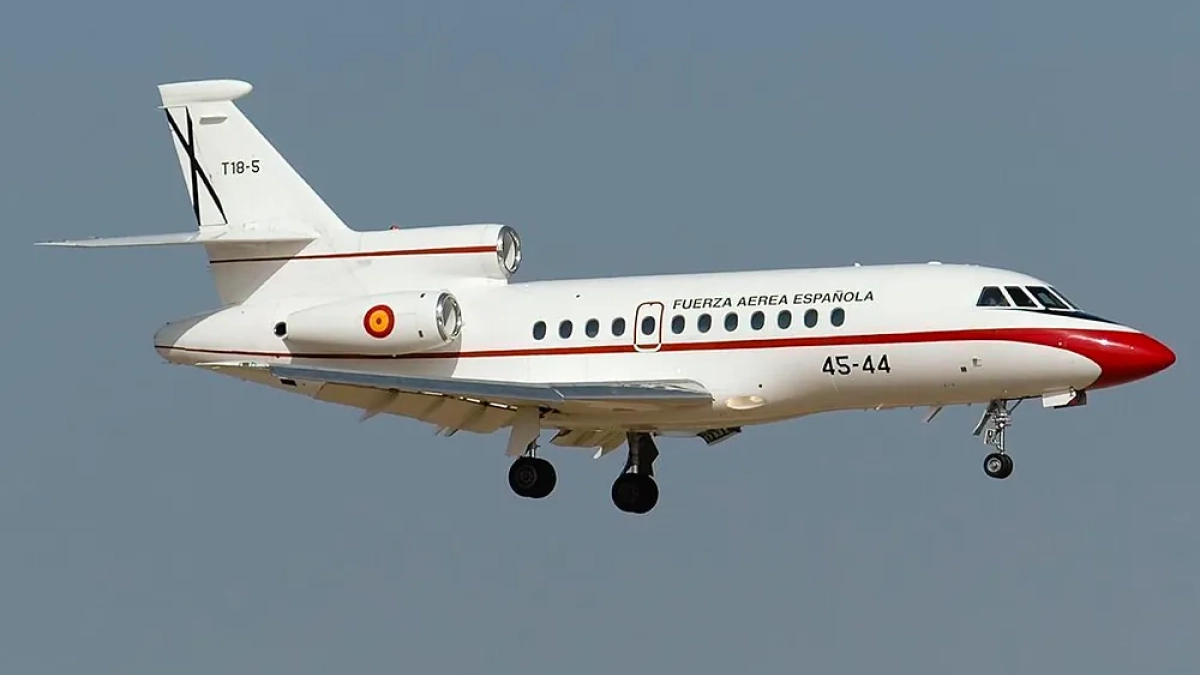
In parallel, Boost Air is bidding for a separate contract worth nearly 120 million euros to maintain the military's fleet of VIP aircraft, which are used by various state officials.
The company's push into defence contracting is supported by shareholders that also include the Basque Aperribay family, the owners of military vehicle systems maker Sapa Placencia, who hold a 6 percent stake in Boost Air alongside Azuaga and Casado's Hyperion Fund.