Dominican Republic President Luis Abinader said Monday that national chicken production could reach 25 million units in December, and said government institutions have been instructed to prioritize purchases of Dominican-made products for the country's Christmas assistance programs.
Speaking during his weekly press briefing known as La Semanal con la Prensa, Abinader addressed concerns about imports of meat products and complaints from national producers, who argue that local output is already enough to meet demand. Abinader has held the briefing regularly throughout his presidency to respond to journalists' questions on government policy.
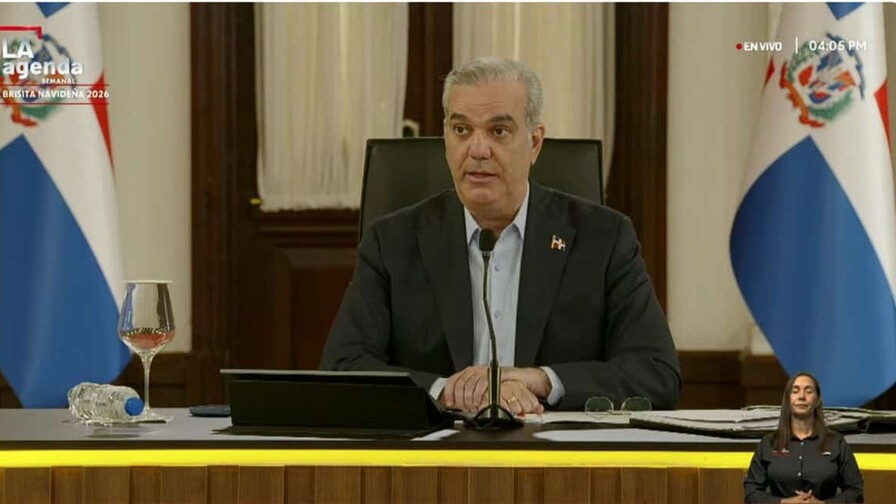
Abinader said the estimates he had received pointed to production of 24.5 million chickens in December, though producers hope to reach 25 million. "They have told me 24 and a half million. They tell me: we are going to reach 25," he said, according to the briefing.
Other staple foods also up
The president said production of eggs, plantains and rice had also increased, and said the main products in the family food basket had registered significant increases in recent years.
Chicken, rice, plantains and eggs are staples of the Dominican diet, and their prices are closely watched by households, particularly around the Christmas holidays when government assistance programs distribute food baskets to lower-income families.
Dominican products for Christmas programs
On the purchases for the Christmas programs, government representatives said the products being distributed are of national origin, with the exception of items such as apples and small coconuts known locally as coquitos, which must be imported.
Representatives of the Institute of Price Stabilization, known by its Spanish acronym Inespre, said the chicken used in its programs is 100% locally produced. Inespre is the state agency responsible for regulating food prices and distributing subsidized goods to lower-income households in the Dominican Republic.
Abinader said the institutions responsible for food assistance hold weekly meetings with the Ministry of Agriculture to coordinate purchases based on product availability. He said that when overproduction is recorded, officials try to work those foods into the menus of public institutions, while in situations of shortage, alternatives are sought to avoid pressure on prices.
He said the order was always to give priority to the national market.
Pig sector hit by African swine fever
On pork production, Abinader acknowledged that African swine fever has reduced the national supply and said he hoped 2027 would be a year of repopulation for the sector.
African swine fever is a highly contagious viral disease that affects domestic and wild pigs. It does not affect humans but can be fatal for pigs, and outbreaks have forced producers in several countries to cull animals to limit its spread.
Abinader also said authorities were studying an international vaccine that could help the sector recover.
Egg exports and a new Bahamas route
The president said the Dominican Republic is exporting significant quantities of eggs to Cuba, the Bahamas and Guyana.
He said the government is working to establish a direct transport route to the Bahamas, after discussing with that country's prime minister the logistical difficulties of shipping products through Florida.
Despite the official statements about national production capacity, Abinader's government did not provide figures on the volume of meat imports during the briefing, nor did it clarify whether it was considering reducing imports in response to the producers' complaints.
What happens next
Abinader said he hopes 2027 will be a year of pig repopulation, and the government is working to establish a direct transport route to the Bahamas for egg exports.
Test yourself
What figure did President Abinader say national chicken production could reach in December?
Which disease has reduced the Dominican Republic's national pig supply, according to Abinader?
Which countries did Abinader say the Dominican Republic is exporting eggs to?
Have your say
Should governments prioritize domestic food production over imports for assistance programs?
Where it happened
Santo Domingo, Dominican Republic