Xiaomi has released new black and grey versions of its Mijia DC Inverter Cooling and Heating Fan in China, pricing the all-season appliance at 799 yuan, or roughly 120 dollars.
The device is designed for year-round domestic climate control, operating as a room heater during cold weather and switching to ventilation and cooling during the summer months.
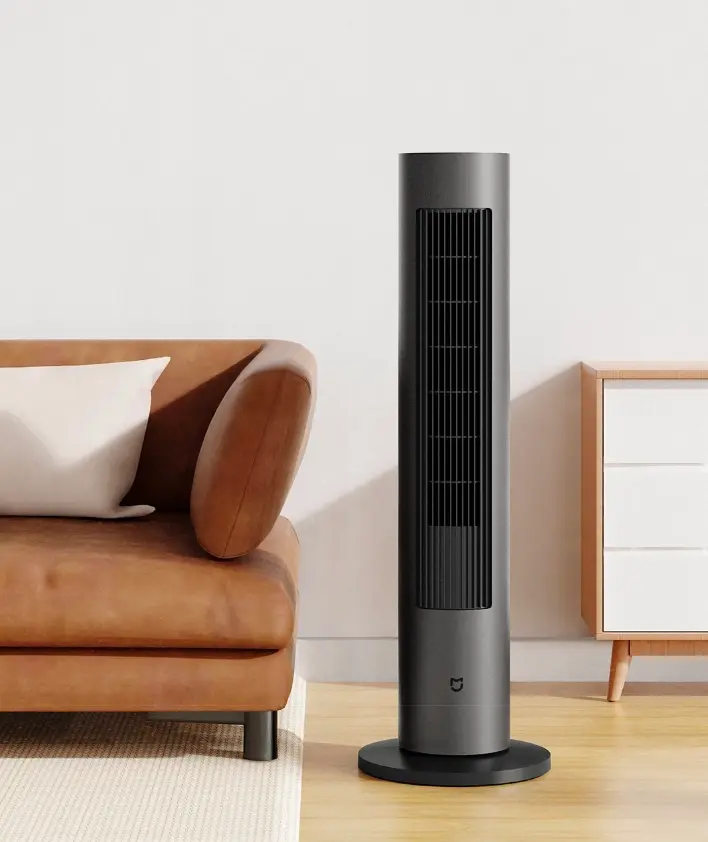
At the core of the machine is a patented rotating mechanism equipped with a positive temperature coefficient ceramic heating element rated at 2,200 watts. The ceramic component begins supplying warm air immediately after the unit is switched on. In its closed position, the fan blows heated air into the room, while opening the mechanism switches the output to provide a cool breeze.
Motor design and noise levels
The tower fan stands on a circular base measuring 30 centimetres across, designed to take up minimal floor space, and has an overall weight of 6.9 kilograms. Internal airflow is powered by a brushless direct-current motor with copper windings and inverter speed control. According to the manufacturer, the inverter setup operates at noise levels as low as 38.4 decibels, a volume comparable to a quiet library.
Three distinct airflow settings are built into the hardware, including direct air delivery, simulated natural wind patterns, and an overnight sleep mode. Owners can connect the unit to the Mi Home smartphone application to select from 100 individual heating levels. The companion app also controls motorised horizontal oscillation, which sweeps from 30 degrees to 150 degrees to circulate air across larger living spaces.
Seasonal heating and ventilation
Xiaomi is pitching the product as a versatile alternative to buying standalone heaters and cooling fans, eliminating the chore of packing heating equipment away into storage when temperatures rise. The manufacturer noted that the cooling function provides room ventilation rather than refrigerated air, as the compact tower does not house a compressor cooling circuit.
Headquartered in Beijing, Xiaomi produces smartphones alongside an extensive portfolio of domestic appliances sold under its Mijia brand. The hardware links with the company's smart home software ecosystem, enabling mobile remote controls and automated scheduling across interconnected household devices.