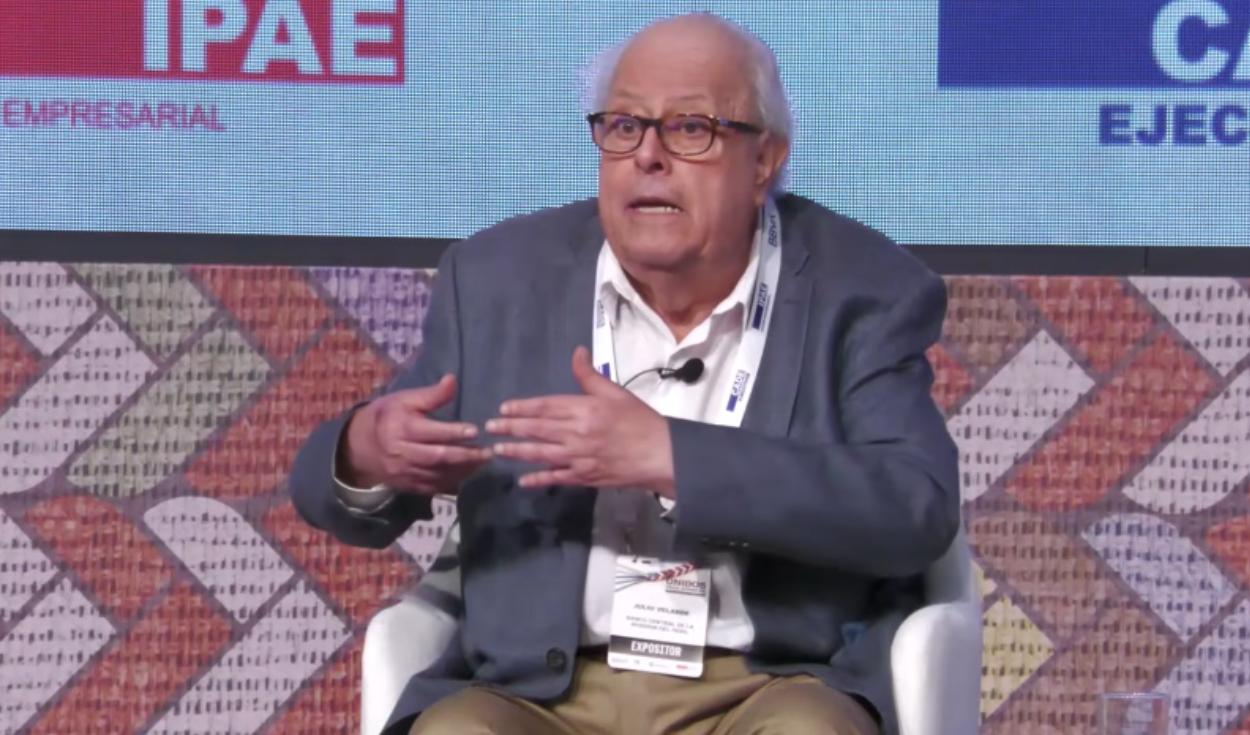
Julio Velarde, president of Peru's central bank, the Banco Central de Reserva del Peru (BCRP), said public sector management in the country was not merely bad but outright dismal, describing it as the main obstacle preventing Peru from turning its economic resources into better living conditions for its population.
Velarde made the remarks during his participation in CADE Ejecutivos 2026, a gathering of business and political leaders held in Urubamba, in the Cusco region. He said that having higher revenues or steady economic growth was not enough if the state lacked the capacity to meet the population's needs and improve its living standards.
His criticism focused on the country's persistent struggles in education and health, sectors he said continue to lag despite the resources the economy generates.
Call to invest mining revenue in health and education
Velarde argued that the current favourable cycle in mineral prices gives Peru an opportunity it should seize to push forward new projects and address its main shortfalls. He noted that mining activity generates tax revenue that can help fund improvements to public services.
He said the funds collected by the treasury should also serve to improve health and education and to build up human capital, pointing to where he believes the additional tax revenue from the mining boom should be directed.
According to Velarde, the point of the price boom should not be limited to higher tax collection, but should also strengthen the conditions Peru needs to sustain its development over time. He linked progress in education and health directly to people's ability to access better jobs and take part in a more productive economy.
Peru lags behind Asian economies, Velarde says
The BCRP president also warned that gaps in these services continue to separate Peru from other economies. Referring to the educational results of Asian countries such as Japan, South Korea and China, he questioned Peru's lag and noted that Latin America as a whole trails well behind in international comparisons.
Velarde held up the institutional transformations of Asian countries as a reference point, saying the development of an efficient bureaucracy went hand in hand with their growth. He specifically cited Japan, whose administrative reform began in 1868 during the Meiji Restoration, highlighting how the country reorganised its state structure to improve how it functioned.
He also pointed to China and South Korea, saying the quality of public management was decisive in their economic transformations. His argument was that having resources alone does not guarantee better outcomes, and that the state needs institutions capable of carrying out projects and delivering services that meet citizens' needs.
In Peru's case, he said, these shortcomings show up in the country's difficulties improving education and health, two areas that shape productivity and the prospects for long-term growth.
Growth still needed to improve living standards
Velarde also defended the importance of economic growth as a condition for improving living standards. He said greater productive activity could transform rural economies, expand consumer markets and create opportunities for segments of the population that still face greater hardship.
Test yourself
What institution does Julio Velarde lead?
What did Velarde say should be done with higher mining tax revenue?
Which country did Velarde cite for administrative reform beginning in 1868?
Have your say
Should higher mining tax revenue be directed primarily toward health and education?
Where it happened
Urubamba, Peru