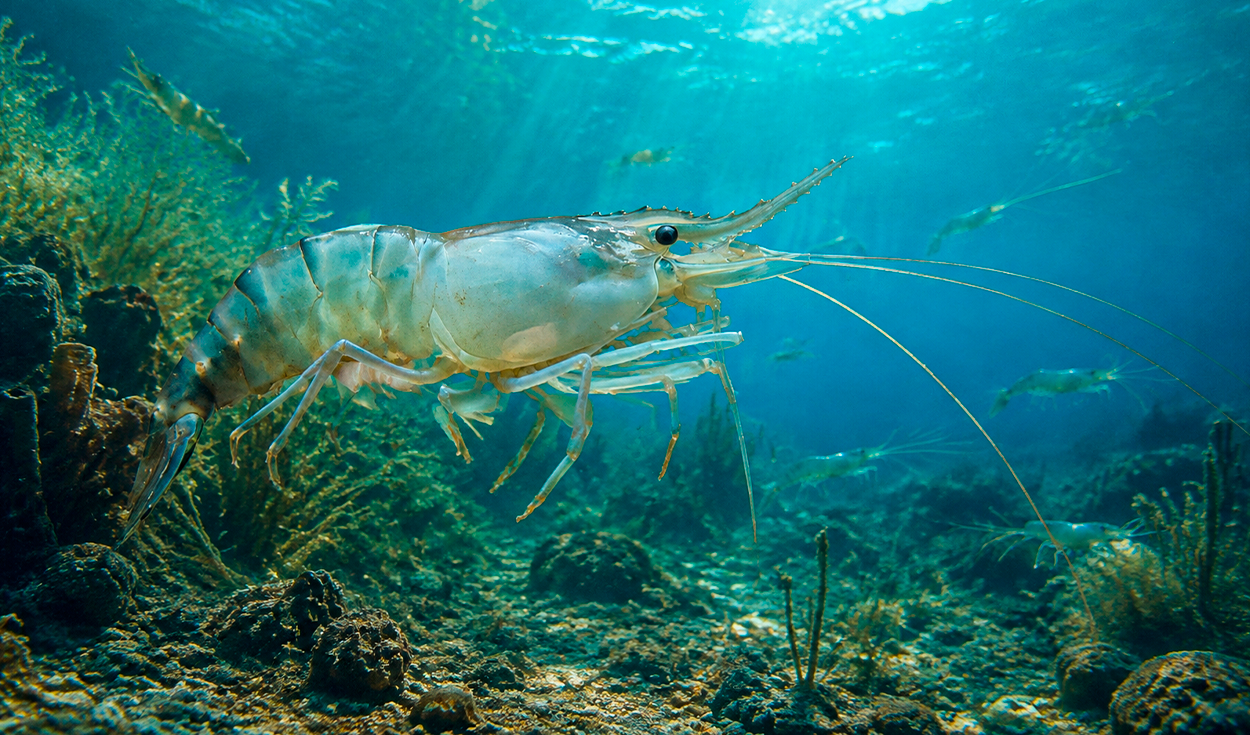
An international study led by the Spanish National Research Council (CSIC) has redefined the evolutionary history of shrimp, revealing that they originated in the Eastern Pacific Ocean about 125 million years ago. The findings, published in the Journal of Biogeography, combined genetic data, fossil records, and geographical information to challenge hypotheses held for decades.
Researchers analyzed palaemonid shrimp and found that their most recent common ancestor emerged during the Early Cretaceous period. This discovery discredits the classic theory that placed their origin in the ancient Tethys Sea. Mónica Núñez-Flores, a CSIC researcher, said the finding drastically changes the understanding of how these organisms colonized the planet.
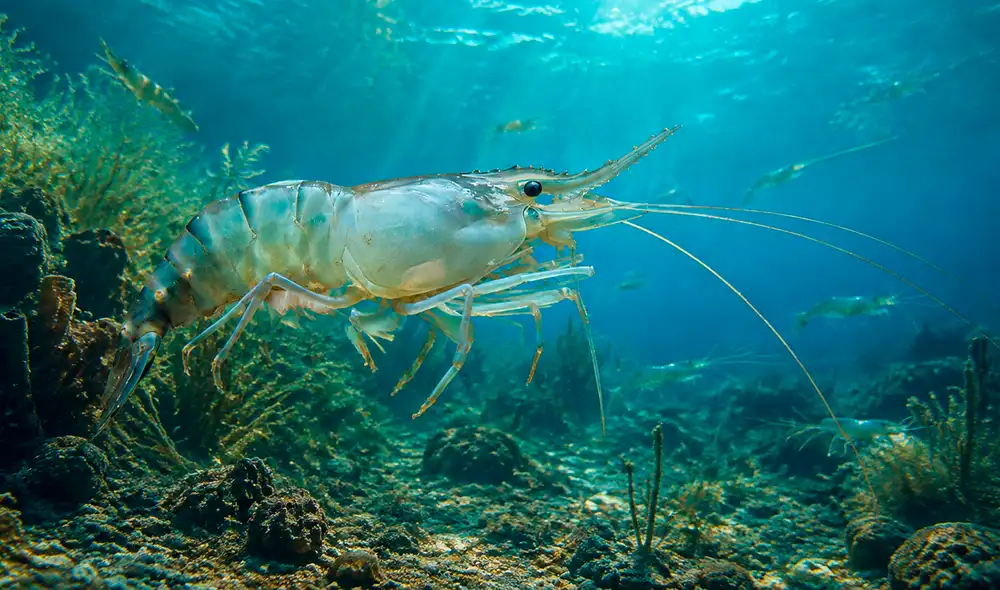
Scientists determined that the expansion of these crustaceans was not driven solely by continental drift or the movement of tectonic plates. Instead, ecological adaptation proved to be the decisive factor in their successful global colonization.
Global migration routes and fossil mapping
From the Eastern Pacific, different shrimp species established multiple transoceanic migration routes over geological eras. The research team identified paths linking the Pacific Ocean with Oceania and Southeast Asia, as well as Atlantic crossings between tropical America and the western coast of Africa.
Marine dispersion gained strength around the Cretaceous-Paleogene transition approximately 66 million years ago, following the asteroid impact that wiped out the dinosaurs. Researchers suggested that the restructuring of ecological niches and the expansion of coastal environments created key opportunities to occupy new ocean basins, though they noted this represents a pattern-based interpretation rather than a proven causal relationship.
To reconstruct this evolutionary journey, the team used statistical models of continuous space along with a phylogeny calibrated using fossils and molecular markers. They examined more than 34,000 distribution records from 155 living species, providing high spatial resolution without dividing the planet into pre-set regions.
Ecological tolerance and larval adaptation
The study also evaluated whether longer larval stages in saltwater helped shrimp travel farther compared to species that complete larval development in freshwater. The data disproved that larval duration limited long-distance dispersion over geological time.
Instead, tolerance to varying environmental conditions proved far more important than the length of the larval phase. Enrique González Ortegón, a researcher at the Institute of Marine Sciences of Andalusia, explained to the SINC Agency that contemporary distribution was shaped by their ecological tolerance and historical opportunities for movement.
The evidence supports an evolutionary model where ecological flexibility and ocean travel drive pantropical biodiversity alongside major geological transformations.