The Russian Ministry of Defence announced on Sunday that its armed forces have begun preparing for massive attacks against Ukraine's energy sector as winter approaches.
Moscow presented the planned strikes on electricity networks and heating infrastructure as a response to ongoing Ukrainian attacks against Russian energy facilities and other nonmilitary targets.
The Russian announcement specified neither a timeline nor the specific facilities that could be targeted. The ministry also claimed that coordinated strikes against Ukrainian defence industry facilities continued overnight, although claims by either warring side cannot always be independently verified in real time.
Ukrainian drone strikes on Russian refineries
The warning from Moscow follows a major expansion of Ukraine's drone campaign targeting locations deep inside Russian territory. Kyiv maintains that striking these facilities cuts off the energy revenues and supply lines supporting the Russian war machine.
According to news agency Reuters, gasoline production in Russia fell to roughly 70 percent of domestic demand by late August. Ukrainian drone strikes forced major oil refineries in Perm, Nizhny Novgorod, and Yaroslavl to halt operations, creating an estimated daily deficit of about 35,000 tonnes of fuel.
Moscow was forced to increase fuel imports and extend its ban on diesel exports until September 30 to stabilize its domestic market.
At the same time, Russia has intensified strikes against Ukrainian ports, transport networks, industrial facilities, and power infrastructure. An attack on August 27 struck targets across multiple regions, damaging businesses, warehouses, and infrastructure networks while causing major rail delays and prompting fresh calls from Kyiv for additional air defence systems.
Ammunition depot explosion in Mila
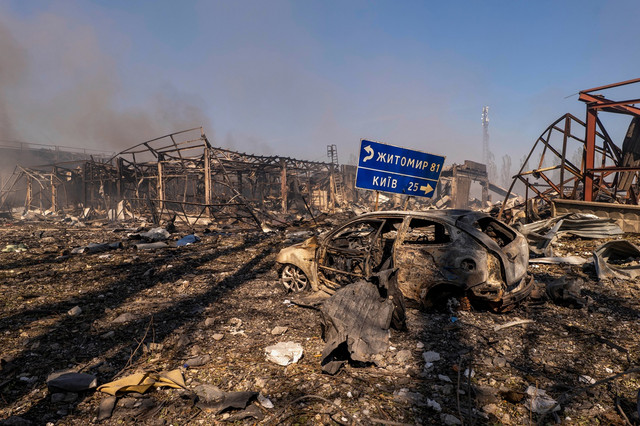
The ongoing escalation coincides with a major tragedy in Mila, a town west of Kyiv, where a Russian drone struck a military ammunition depot. Secondary explosions at the site killed at least 37 people, injured dozens more, and damaged over 50 buildings.
The facilities hit included a care home for elderly people and individuals with disabilities, forcing the evacuation of hundreds of residents.
Ukrainian President Volodymyr Zelenskyy called storing explosives so close to a populated area unacceptable and announced criminal investigations into potential official negligence. The Ukrainian Ministry of Defence has ordered a full audit of all ammunition storage facilities following a similar incident in July.
Russian strikes around the capital continued for a third consecutive day, with two young girls, aged 14 and two, among the victims killed in separate attacks.
Power crisis at Zaporizhzhia nuclear plant
Concerns are also growing over the Zaporizhzhia nuclear power plant in southern Ukraine, which remains under Russian control. The International Atomic Energy Agency, the United Nations nuclear watchdog, reported that the facility has been left without external power for more than a week.
The plant is currently operating on emergency diesel generators with limited fuel reserves. The agency stated that it is seeking a localized ceasefire to allow technical teams to repair the damaged power lines.
Stalled diplomatic talks
Against the backdrop of increasing military action, Kyrylo Budanov, a top adviser to the Ukrainian presidency, estimated that technical talks between the two sides could begin soon. However, Budanov warned that no immediate agreement should be expected.
A major obstacle to negotiations remains Moscow's demand that Ukraine withdraw its forces from areas of the eastern Donbas region that Kyiv still controls, a requirement that Ukrainian leadership rejects.