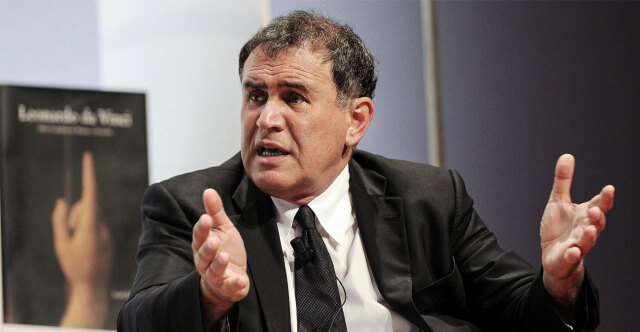
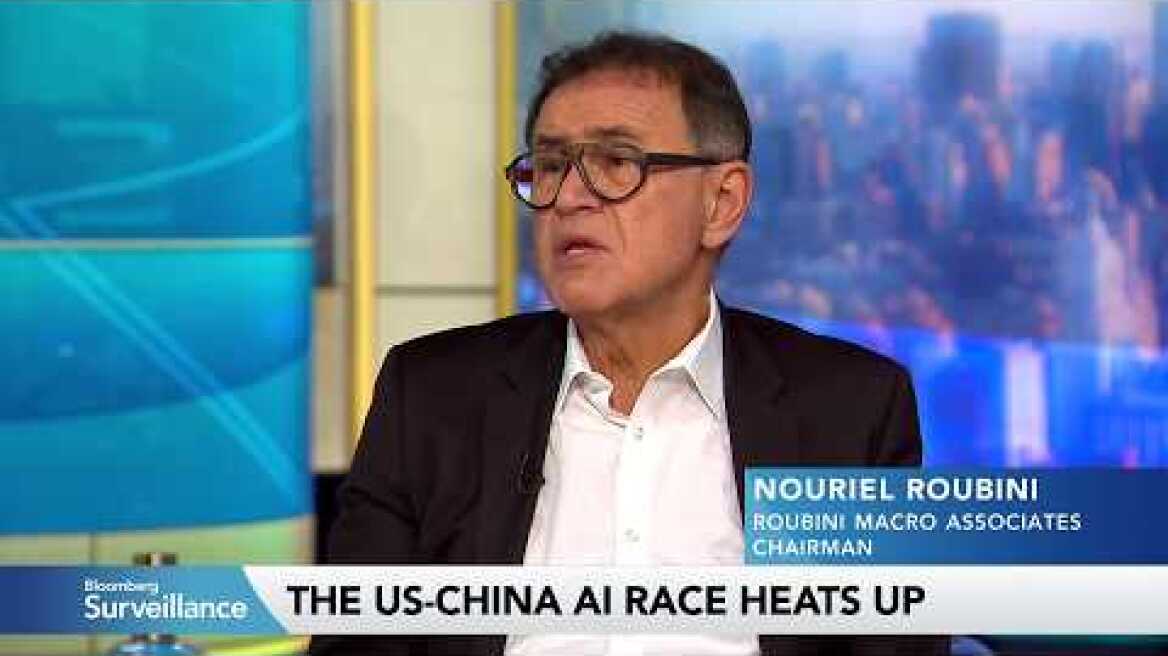
Nouriel Roubini, the economist who became famous for warning early about the 2008 financial crisis, has forecast that the United States economy could grow at an annual rate of up to 10% by the middle of this century, while unemployment could climb as high as 80% because of artificial intelligence.
Roubini set out the forecast in a television interview with Bloomberg, saying the potential annual growth rate of the US economy could rise from 2% today to as much as 10% by mid-century, at the same time that unemployment could reach as high as 80%.
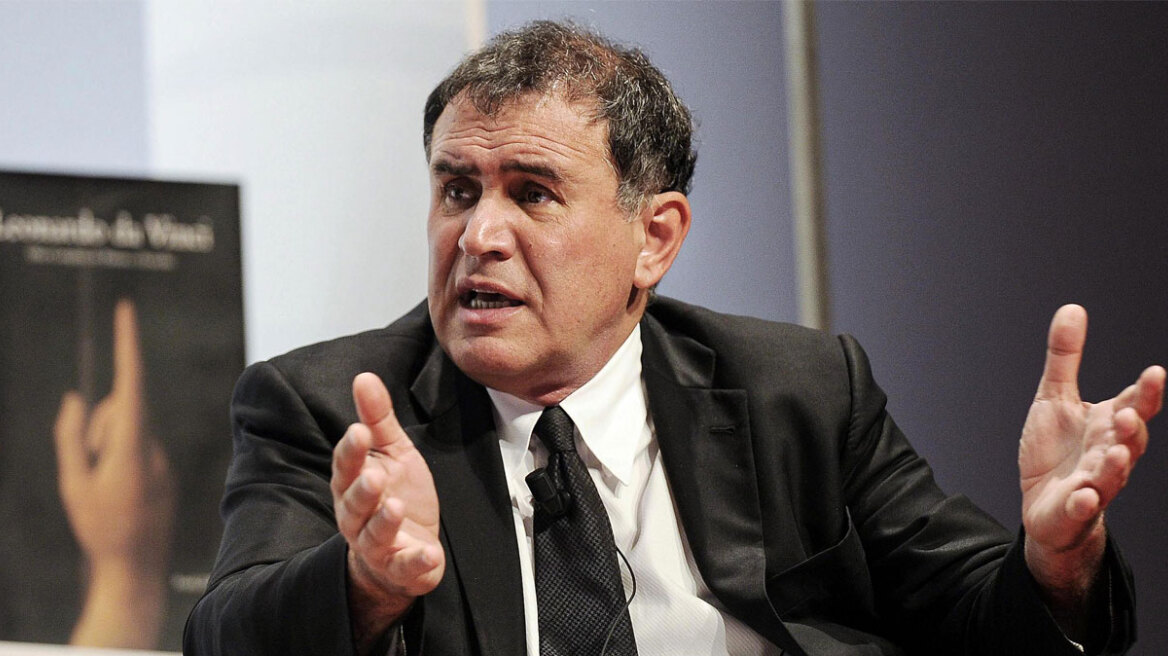
Roubini earned the nickname "Dr. Doom" for his gloomy predictions, including his advance warning of the 2008 financial crisis. He is also well known in Greece from the era of the country's bailout memorandums, when his forecasts about the Greek economy's future stirred heated debate. In June 2010, weeks after Greece sought support from the bailout mechanism, he argued in the Financial Times that the country faced a solvency problem, not just a liquidity one. In September 2011 he backed an orderly default and a return to the drachma, and in May 2012 he judged it likely Greece would leave the euro within 2012 or 2013. That forecast did not come true, and by December 2012 he himself said the risk of exit had eased; Greece stayed in the eurozone even through the crisis that peaked again in the summer of 2015.
Roubini made similar remarks on 13 November at Yahoo Finance's investment conference, and his comments resurfaced internationally through reports by Business Insider on 17 November and Yahoo Finance on 23 November. He expanded on his optimistic view of AI-driven growth in a further interview published on the Top Traders Unplugged podcast.
Growth without jobs
At the heart of Roubini's analysis is a core contradiction: artificial intelligence could let businesses produce far more goods and services while relying on fewer human workers. Productivity gains, normally the goal of any economy, could become one of the biggest social challenges of the coming decades. Companies that develop or use AI effectively could boost profits while cutting labour costs, while workers risk losing not just their jobs but also their share of the wealth the new economy generates.
Roubini said the question is not only how much wealth AI will create, but whose hands it ends up in. In the Bloomberg interview he invoked Karl Marx, arguing that concentrated wealth and widening inequality create a problem for capitalism itself: if businesses can produce huge quantities of goods and services but much of the population lacks the income to buy them, the economy risks facing insufficient demand.
A case for redistributing wealth
Roubini said this is one of the main reasons redistribution of wealth will become necessary, calling it not only a matter of social justice but a condition for economic and social stability. One option he raised is a universal basic income, a fixed payment to citizens regardless of whether they work, unlike conditional unemployment benefits. He described two approaches: taxing part of the wealth generated by AI's biggest winners and redistributing it to citizens, or giving society broader ownership stakes in the companies that come to dominate the new economy, so people benefit directly as their value rises. He said redistribution does not necessarily mean abandoning capitalism, but adapting it to new economic conditions.
Robots and pensions
In an earlier Bloomberg interview last July, Roubini raised the related issue of pension system sustainability. Governments typically respond to an ageing population and underfunded pension schemes by raising the retirement age, but he questioned the point of that if available jobs have shrunk sharply in the meantime. He said that over the next 20 to 25 years, AI and robotics could replace a significant share of the workforce, making conventional pension fixes inadequate, since today's systems depend heavily on contributions from workers and employers. The financial outlet Benzinga revisited this point on 24 November.
From Dr. Doom to Dr. Boom
The most striking feature of Roubini's recent comments is his shift away from the pessimism long associated with his name. In the interview published on 25 November on Top Traders Unplugged, he said his view of the economy's prospects began changing about two years ago. He pointed to advances in generative AI alongside robotics, quantum computing and nuclear fusion as evidence the global economy is entering a long period of technological and economic boom, estimating that by the end of this decade the US potential growth rate could double to near 4%. He said the economic benefits of technological progress can outweigh the drag from factors such as trade restrictions and geopolitical tensions.
Why he is not worried about an AI bubble
Amid growing warnings about a possible collapse in AI company valuations, Roubini has struck an optimistic tone. In an interview with Japan's Nikkei published on 12 November, he called AI the greatest technological innovation in human history, saying its significance could exceed even that of the printing press, electricity and the railroads. He accepts that many companies will fail and markets will go through sharp swings, but argues there is a key difference from past tech bubbles: current computing power does not meet demand, which for now limits the risk of a collapse driven by excess infrastructure building.
Roubini compared today's changes to the first Industrial Revolution, which created enormous wealth alongside social inequality until the gradual rise of the modern welfare state, minimum wages, public education and pension systems let more people share in the gains. He believes something similar will be needed in the AI era so technological progress does not turn into a source of social unrest.
Roubini stressed that 80% unemployment is not an inevitable outcome but an extreme scenario, one that assumes AI will be able to replace human labour on an exceptionally large scale. He said it remains possible that the technological revolution creates entirely new categories of jobs, as happened with past major technological shifts. He said his real concern is not that AI will fail, unlike much of Wall Street's current worry, but the social consequences that could follow from its very success.
Test yourself
What annual US growth rate did Roubini say AI could make possible by mid-century?
What nickname was Roubini originally known by before his recent optimism about AI?
What solution did Roubini suggest to address AI-driven job losses?
Have your say
Do you think a universal basic income will be needed if AI replaces large numbers of jobs?