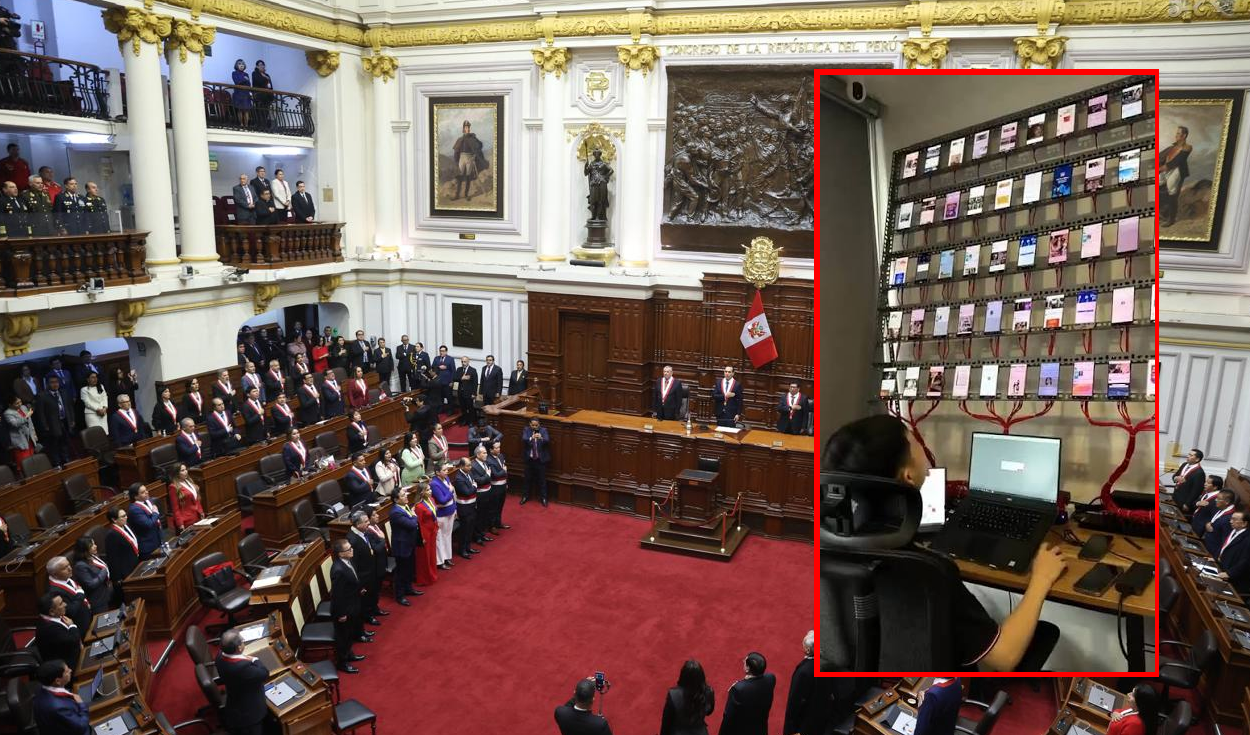
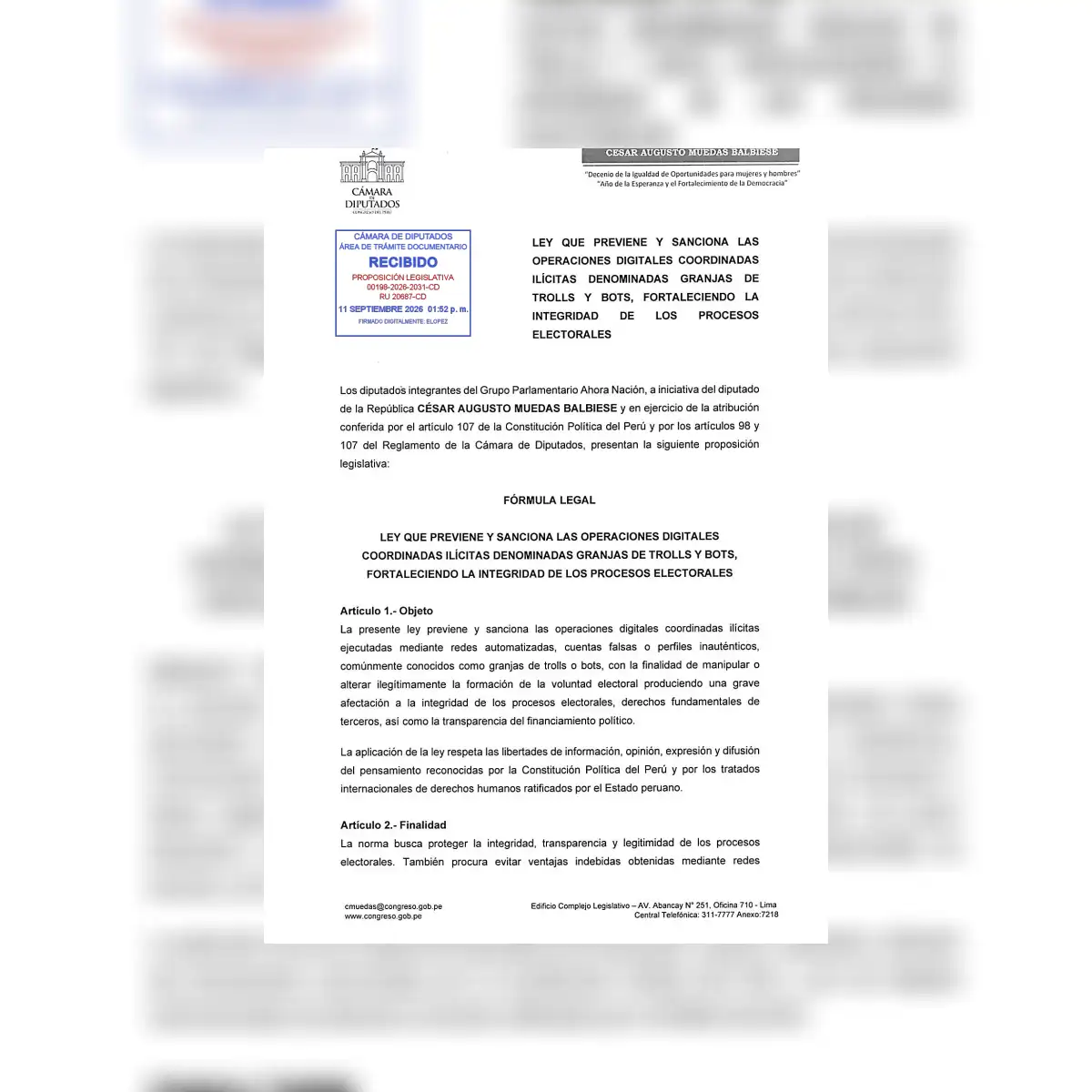
The Peruvian political party Ahora Nación has introduced a bill that would send people to prison for four to six years for creating, running, financing, directing or hiring bot and troll farms used to spread false accusations or manipulate voters during election campaigns.
The measure, led by congressman César Muedas, would add a new article, 12-B, to Peru's Law No. 30096, the Law on Computer Crimes.
Longer sentences for aggravating factors
Under the bill, the penalty would rise to five to eight years in prison when aggravating circumstances are present. These include financing from sources banned under electoral law, involvement of an elected official or public servant, use of state resources or infrastructure, or operations built on artificial intelligence and deepfakes designed to put false statements in the mouths of candidates.
The tougher penalty would also apply if the bot or troll network is found to be part of an organized criminal group.
Fallout from the Cerimedo arrest
The bill follows a wider debate across the region over disinformation networks, triggered by the arrest of Argentine operative Fernando Cerimedo. He is accused of promoting an international disinformation network active in election campaigns in Bolivia, Brazil, Argentina and Chile, and was detained in Bolivia.
According to the bill's supporting document, Peru's National Elections Jury, known as the Jurado Nacional de Elecciones, recorded 704 alerts of electoral disinformation over the eleven months leading up to February 2026. Of those, 242 were logged in December 2025 and 215 in January 2026.
The Jurado Nacional de Elecciones is Peru's top electoral authority, responsible for overseeing the fairness of elections and resolving disputes over the electoral process.
New rules for officials and parties
The bill would also amend Peru's Civil Service Law, making it a disciplinary offense, punishable by suspension or dismissal, for a public servant to create, run or finance a network of fake accounts using public resources.
It would further change Law No. 28094, the Law on Political Organizations, so that a party creating, financing or hiring such a network to spread false accusations against an official or candidate would count as a very serious infraction.
Disclosure requirements for digital spending
Parties and candidates would be required to declare their spending on digital advertising, hiring communications agencies, managing accounts and contracting artificial intelligence systems to Peru's National Office of Electoral Processes, known as the ONPE.
The ONPE organizes and runs Peru's elections, including counting votes and managing campaign finance oversight.
Under the bill, the ONPE, the Jurado Nacional de Elecciones, the Public Prosecutor's Office and the National Police of Peru would be required to coordinate mechanisms to prevent, investigate and prosecute these bot and troll operations.