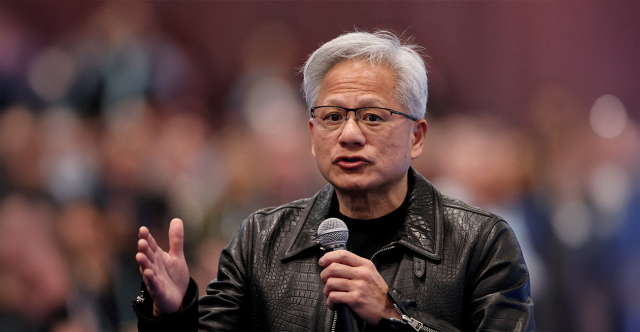
The turmoil engulfing Nvidia after the surprise resignation of co-founder and 33-year chief executive Jensen Huang is not just a corporate crisis in Silicon Valley. It is rippling through Switzerland's foreign currency reserves, Norway's sovereign wealth fund, California's pension system and the savings of millions of ordinary investors who hold direct or indirect stakes in the US chipmaker that became the leading symbol of the artificial intelligence boom.
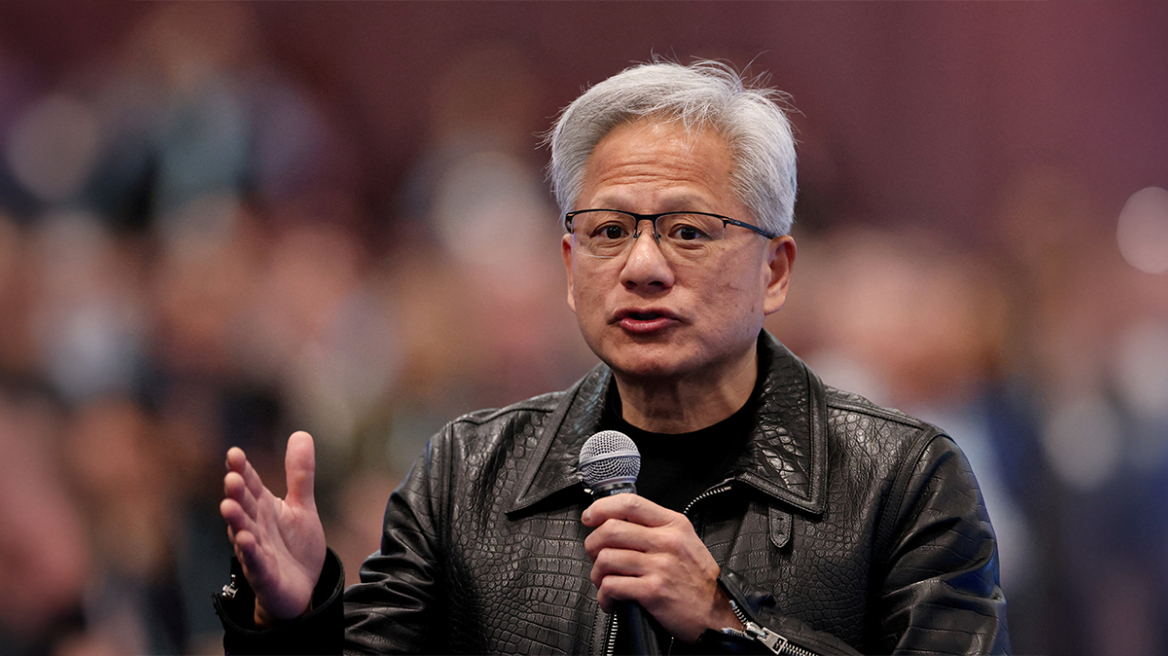
About two-thirds of Nvidia's shares are held by institutional investors, according to shareholding data from May 2026, which put institutional ownership at roughly 66.53%, insiders and executives at 4.02%, and the remaining 29.45% split between other companies and individual investors. More recent aggregated data put institutional ownership closer to 70%.
That concentration matters now because of the day's events: Huang's resignation, the appointment of chief financial officer Colette Kress as interim leader, and the elevation of Harvey Jones to chairman of the board. Nvidia shares fell more than 12% before stabilizing around -5%, threatening the company with a market value loss of roughly $500 billion.
Switzerland's central bank holds $13 billion in Nvidia
One of the most unexpected investors exposed to the crisis is the Swiss National Bank, Switzerland's central bank. Filings to US regulators for the second quarter of 2026 showed the bank held about 65.1 million Nvidia shares at the end of June, worth roughly $13 billion.
Nvidia was the Swiss central bank's largest single holding in US stocks, making up nearly 7% of a portfolio worth $191 billion. The bank has built up large foreign currency reserves through years of currency market interventions and has placed a significant share of them in international equities.
Its exposure is not limited to Nvidia. Holdings in seven major technology groups tied to artificial intelligence, including Microsoft, Alphabet and Amazon, were worth almost $50 billion at the end of June, meaning a large part of the Swiss bank's US equity portfolio is tied to the same companies now shaken by the Huang affair.
Norway's $62 billion stake
An even larger holding belongs to the Government Pension Fund Global, the world's largest sovereign wealth fund, managed by Norges Bank Investment Management. Norway's fund held 1.28% of Nvidia's share capital at the end of June, valued at roughly $62 billion, or 612 billion Norwegian kroner, making Nvidia the fund's largest single equity investment. The fund holds stakes in about 7,100 companies worldwide, built from Norway's oil and gas revenues.
Vanguard and BlackRock lead institutional holders
Among asset managers, Vanguard Group controls roughly 9.09% of Nvidia, or about 2.2 billion shares, through various investment vehicles, according to aggregated data. BlackRock follows with about 8.04%, or nearly 1.94 billion shares. State Street Investment Management holds around 4.18%, or 1.01 billion shares, while Fidelity, through FMR, holds about 3.88%, or 938 million shares. Geode Capital Management holds about 2.51%, or more than 600 million shares.
These figures come from different reporting periods in 2026 and should not be read as a single snapshot. Nvidia's own March 2026 filing listed BlackRock at 7.43% and Vanguard at 7.31%. Much of this capital belongs to third parties through mutual funds, pension plans and ETFs, meaning losses flow through to end investors rather than the managers themselves.
California pension funds hold billions
The California Public Employees' Retirement System, one of the largest US public pension funds, held 48.99 million Nvidia shares worth about $9.8 billion in June 2026, according to its annual financial report. Nvidia was the fund's largest single equity holding, ahead of Apple at $9.43 billion and Microsoft at $6.74 billion.
The California State Teachers' Retirement System showed a similar pattern. An investment report from November 2026 said Nvidia made up 4.4% of its listed equity portfolio, more than any other company. A stock decline does not automatically change pension payouts, but the holdings show how exposed long-term retirement reserves are to swings in major technology firms.
Hedge funds with billion-dollar bets
Specialist investment firms hold even heavier concentrations. Altimeter Capital, linked to investor Brad Gerstner, held about 9.4 million Nvidia shares worth $1.9 billion as of its second-quarter 2026 filing, equal to about 19.2% of its declared US equity portfolio.
Baillie Gifford held a stake worth about $9.7 billion, Sanders Capital about $6.8 billion, and Tiger Global Management, linked to investor Chase Coleman, about $2.2 billion. Nvidia represented about 9.3% of Tiger Global's declared portfolio and about 7.6% of Baillie Gifford's. US regulatory filings capture only declared US securities holdings and do not reflect funds' full assets or hedging positions.
More than 1,000 ETFs spread the risk
Nvidia's exposure extends far beyond direct holders through its weighting in major stock indexes. About 1,070 US ETFs hold Nvidia shares, according to ETF Trends data, and in 639 of them the company ranks among the top 15 holdings.
In large S&P 500-tracking funds such as SPY, VOO and IVV, Nvidia's weighting has ranged from about 7% to 8.3% depending on the reporting date. In specialized technology and semiconductor products such as VGT and SMH, the concentration can exceed 18% or even 20%, meaning an investor in a broad ETF can gain significant Nvidia exposure without buying a single share directly.
Indian mutual funds also exposed
The risk extends beyond the United States. Value Research data showed the Mirae Asset S&P 500 Top 50 ETF had Nvidia exposure equal to 13.08% of its net asset value, while the Mirae Asset NYSE FANG+ ETF had 10.29% exposure. The Motilal Oswal NASDAQ 100 ETF and the ICICI Pru NASDAQ 100 Index Fund each showed exposure of 8.02%.
A 1% fall in Nvidia's share price could, with other factors unchanged, reduce the value of the Mirae Asset S&P 500 Top 50 ETF's portfolio by about 0.13% from that holding alone, illustrating how the stock affects savers outside the United States.
Insiders from Huang to Kress
A significant share of Nvidia's stock remains in the hands of its founders, executives and board members. Huang, despite stepping down, remains the company's largest individual insider shareholder. Nvidia's official March 2026 ownership filing attributed beneficial ownership of 870.6 million shares, or 3.58% of share capital, to Huang, a stake that includes shares held through family trusts and other arrangements and does not entirely represent direct personal ownership.
Other major insiders included Mark Stevens, with about 34.07 million shares, and Tench Coxe, with about 30.56 million. Harvey Jones, who became board chairman after Huang's departure, held about 7 million shares, while Colette Kress, who took over as interim chief executive, held about 4.44 million shares.
These holdings take on added weight amid the leadership change, since the people now managing the crisis also hold a direct financial stake in Nvidia's long-term performance. The company now faces the challenge of maintaining market confidence without the person most closely associated with its dominance in AI processors.