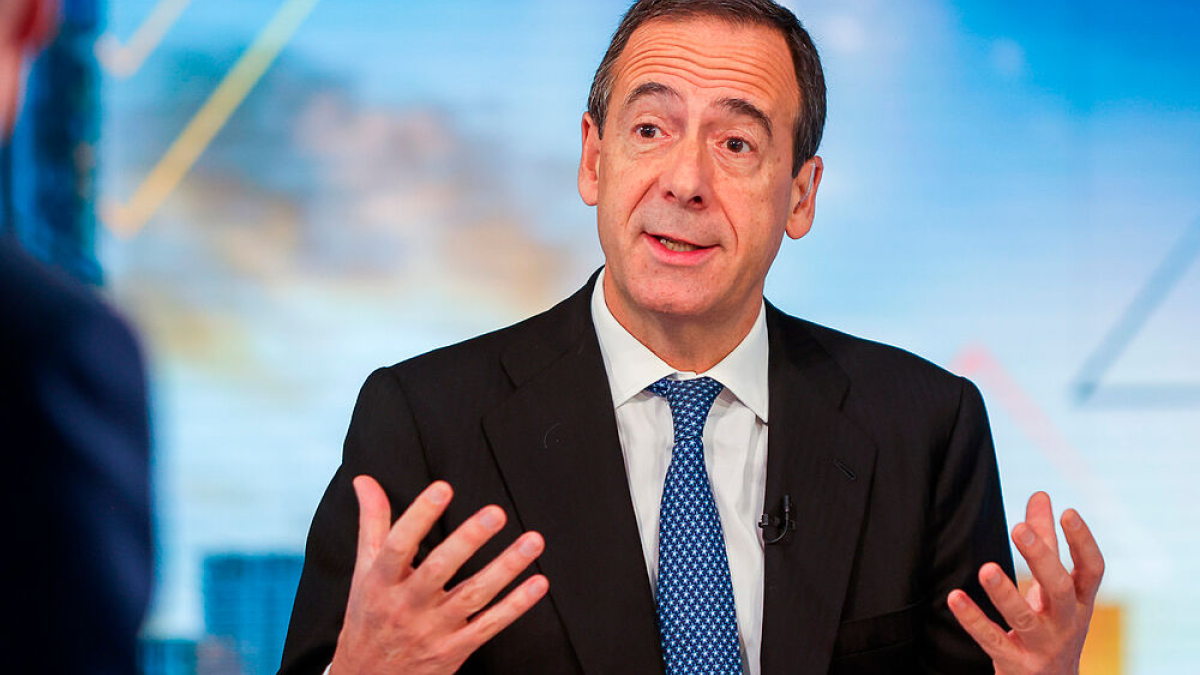
Eurogroup President Kyriakos Pierrakakis arrived in Brussels on Thursday to address European Union leaders at the Euro Summit on economic growth and regional challenges.
Pierrakakis, who also serves as Greece's Minister of National Economy and Finance, is attending the high-level talks alongside European Central Bank President Christine Lagarde. European Council President António Costa invited both financial officials to deliver a joint assessment of economic conditions across the continent.

The Euro Summit brings together the heads of state and government of the euro area, but Thursday's gathering takes place in an expanded format that includes leaders from all 27 European Union member states. The Eurogroup represents the finance ministers of the countries using the single European currency, while the European Central Bank in Frankfurt oversees monetary policy for the eurozone.
During their address, Pierrakakis and Lagarde are scheduled to inform European leaders about current economic developments, the growth trajectory of the European economy, and the structural obstacles facing member states. The discussions aim to provide heads of government with an overview of inflation trends, borrowing conditions, and regional investment priorities.
European Union budget disputes and contributions
The economic briefing unfolds against a backdrop of intensifying friction over the European Union's long-term budget. Community leaders face five major disputes regarding financial commitments, with national governments indicating that they are not prepared to make concessions on their core fiscal demands.
Discussions regarding the European Union budget for the period from 2028 to 2034 face another round of formal negotiations at the summit scheduled for next week in Brussels. Disagreements among member states over spending caps and common programs have contributed to ongoing delays in reaching a comprehensive agreement.
National contributions to the joint budget remain a contentious issue across European capitals. Germany was the largest net contributor to the European Union budget, paying 14.9 billion euros more into European coffers than it received back in community funding. That net contribution grew by 1.8 billion euros compared to 2024, heightening domestic debates in Berlin over European spending.
Wider economic indicators across member nations also reflect a cautious outlook. German consumer sentiment showed only marginal improvement heading into December, while Sweden recently joined the European Central Bank's T2 payment settlement system to enhance cross-border banking operations.

Greek multiannual economic targets
Pierrakakis travelled to Brussels following domestic announcements outlining an upgraded economic trajectory for Greece. The finance minister stated that the government is revising upwards all forecasts for the Greek economy through 2030 in the Multiannual Fiscal Planning document presented to the cabinet.
Greek Prime Minister Kyriakos Mitsotakis convened his cabinet in Athens on Wednesday prior to travelling to Brussels, placing household income support at the front of the domestic agenda. The Greek administration confirmed that targeted support measures will remain in place for as long as required, with Athens having requested greater budgetary flexibility under European fiscal escape provisions.
The medium-term Greek roadmap for 2027 to 2030 projects steady economic convergence, underpinned by annual gross domestic product growth exceeding 2 percent. The official plan forecasts an annual growth rate of 2.1 percent alongside primary budget surpluses averaging 3.0 percent of GDP, creating room for additional positive fiscal measures in 2028.
Greek public debt is projected to decrease to 110 percent of gross domestic product by 2030 under the multi-year fiscal trajectory. To support growth, the Greek state plans to deploy 50.6 billion euros in public investments through 2030, directing capital into strategic infrastructure and business modernization.

Prudent fiscal policy and productivity
The European Commission recently granted formal approval to Greece's national budget and structural blueprint. European officials emphasized, however, that rising international bond yields require national authorities to maintain prudent fiscal policies to protect debt sustainability.
European authorities also completed an assessment of Greek tax policies, identifying 1,236 tax exemptions that cost the public treasury 22.9 billion euros annually. Looking at other revenue sources, the Greek state projects collections from administrative fines and penalties as part of its multiannual budgeting for 2027.
Addressing broader competitiveness challenges, Pierrakakis stressed that technological innovation must underpin European economic strategy. Pierrakakis said artificial intelligence represented the primary opportunity for a productivity revolution across Greece and Europe. He pointed to Greece's 5G spectrum auction as an example of successful policy design, arguing that national initiatives can serve as a model for unified European policies to expand economic capacity.
What happens next
European Union leaders will hold another round of negotiations on the 2028 to 2034 European Union budget at next week's summit in Brussels. In Athens, the Greek cabinet will formally review the Multiannual Fiscal Planning document outlining economic projections through 2030.
Test yourself
Who invited Kyriakos Pierrakakis and Christine Lagarde to brief European Union leaders?
How much more did Germany pay into the European Union budget than it received in returns?
What target does Greece's fiscal roadmap set for public debt as a share of GDP by 2030?
Have your say
Should the European Union grant member states more budget flexibility during economic slowdowns?
Where it happened
Brussels, Belgium