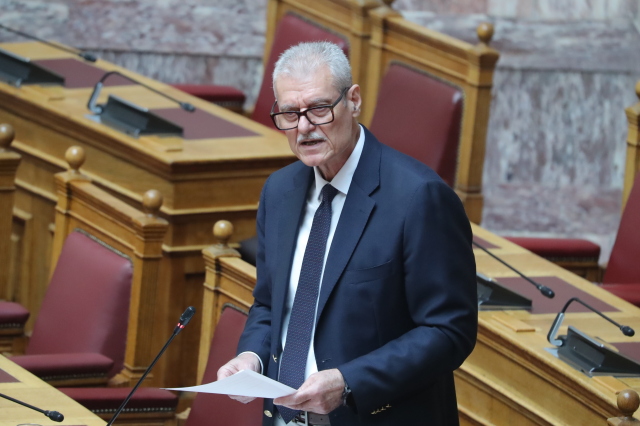
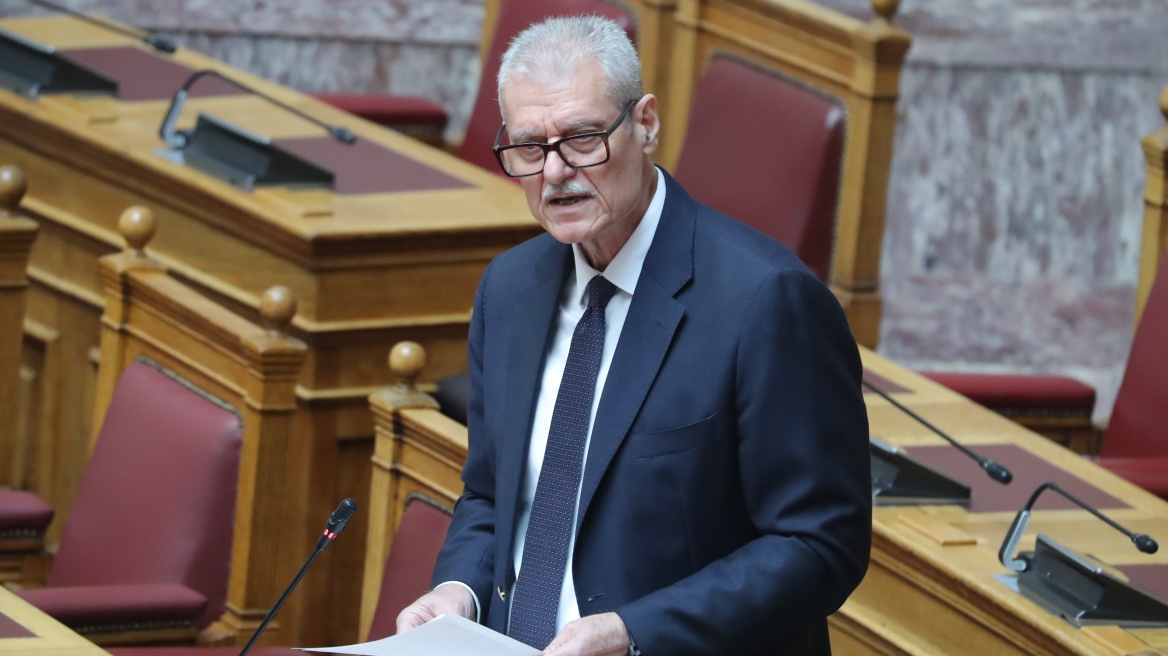
Greece's Ministry of Climate Crisis and Civil Protection has submitted a bill to the Hellenic Parliament that would make state housing assistance paid to people affected by natural disasters exempt from tax and protected from seizure by creditors.
The draft law is titled "New framework of measures for housing assistance and other support after natural disasters, improvement of the state assistance framework and private insurance of businesses against natural disasters," and it amends laws 4797/2021 and 5116/2024.
Housing assistance limits and beneficiaries
The bill sets out who qualifies for housing assistance and the maximum amounts they can receive. Under the proposed rules, one co-owner of a damaged building could receive the full amount of housing assistance for its repair or reconstruction, under certain conditions, while the bill also spells out explicit exceptions to the scheme.
It also redefines the terms for granting first aid ahead of full housing assistance in cases of significant and extensive damage, excluding buildings that remain fit for use.
Tax-free and protected from seizure
The bill establishes a general, across-the-board tax exemption and protection from seizure for housing assistance granted after natural disasters. For insured businesses, the housing assistance rules would apply only to the portion of damage not covered by the insurance company. The same tax-free, seizure-protected status would also apply to compensation paid out by insurance companies.
Single system for applications
A single procedure would be introduced for identifying beneficiaries and granting housing assistance, carried out exclusively through the government's "e-Adeies" (e-Licenses) information system. The bill sets out payment stages for each type of housing assistance, including reconstruction, repair of damaged buildings and self-housing, and introduces mandatory checks at every stage of the process.
Other forms of relief
The legislation also redefines the framework for other forms of assistance to people affected by natural disasters, including a new cap on the cohabitation subsidy. For one-off financial assistance, such as replacing household equipment or covering basic living needs, the bill extends payments to cover simple repair work on auxiliary spaces and their equipment. It also creates an electronic platform through which one-off financial payments would be made going forward.
Temporary housing units
The bill regulates how prefabricated, transportable housing units are managed and handed over to municipalities to temporarily house affected residents, under set terms, conditions and time limits. Used units no longer suitable for this purpose could be transferred to public or private bodies carrying out charitable work. The legislation also introduces administrative penalties and cost recovery for municipalities that fail to return the units on time or in proper condition.
Public buildings and oversight
For damage to public sector buildings, the bill states that housing assistance can cover the entire affected surface of a building, provided its restoration does not fall under the responsibility of another authority.
The legislation also sets procedural rules for regular and extraordinary checks on candidates for housing assistance, requiring municipalities and regions to keep records and files for a set period. It establishes a procedure for stripping beneficiaries of their entitlement and recovering wrongly paid amounts as public revenue.
Fire-hit settlements get new deadline
The bill includes special provisions for housing assistance to rebuild the settlements of Provalinthos and Ampeloupoli, which were damaged by fires on 23 and 24 July 2018. It grants a new deadline for residents there to submit applications and applies specific provisions of a legislative decree dated 28 July 1978.
Independent checks and next steps
According to the bill's explanatory report, the new rules respond to the need to modernise and improve the institutional framework for state and housing assistance after natural disasters, so that support reaches affected people faster, more effectively and with greater transparency.
The report also states that the reforms aim to create a separate department to carry out the checks required under Article 21 of law 4797/2021, to guarantee the independence of the unit responsible for them. Regions would be required to keep all necessary records for at least ten years to support those checks.
The bill also changes the composition of the Observatory of Private Insurance against Natural Disasters and clarifies how compliance with businesses' insurance obligations under the state assistance measures is checked.
Deliberation of the bill is due to begin on Thursday in parliament's standing committee on production and trade.