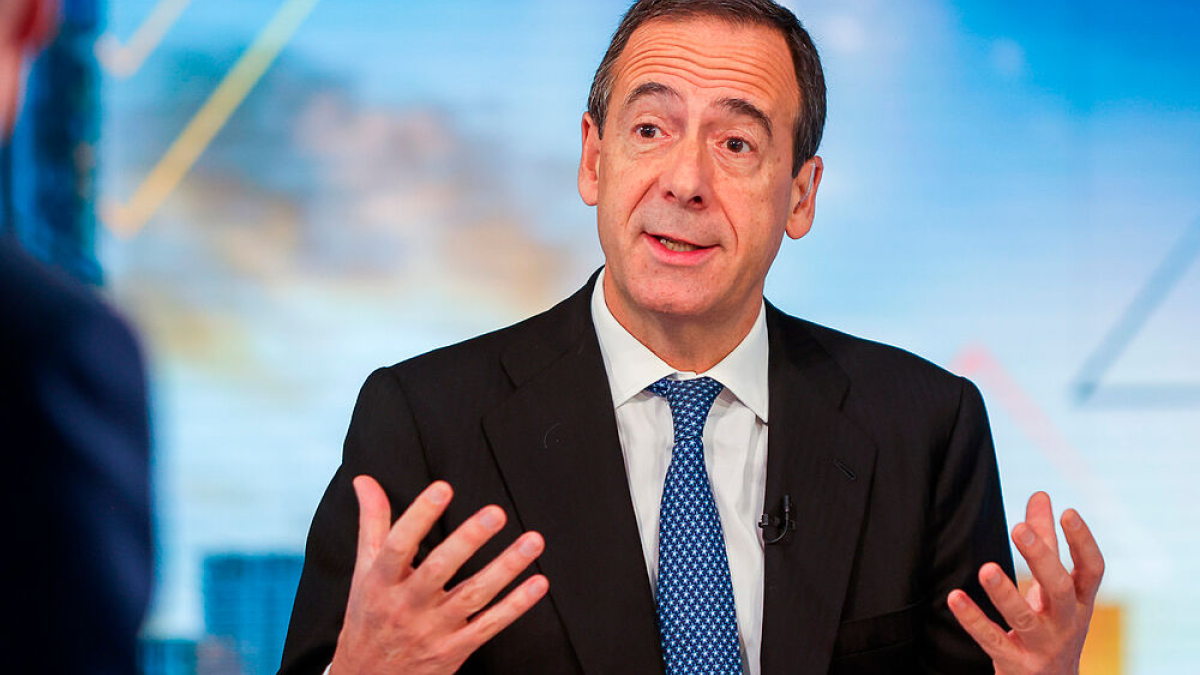
Greece's Deputy Foreign Minister for Economic Diplomacy and Extroversion, Haris Theoharis, and the Governor of the Attica Region, Nikos Hardalias, signed a Memorandum of Cooperation on Tuesday to strengthen exports, attract investment and promote Attica internationally.
The agreement establishes the pilot operation of an Office of Extroversion within the Attica Region's own structures. The office will act as a link between the region and the Foreign Ministry's economic diplomacy services, as well as the state-backed bodies Enterprise Greece and Export Credit Greece.
The goal is to use the expertise and market intelligence of that network to design support tailored to Attica businesses, whether they are taking their first steps into exporting or trying to expand their existing presence abroad.
Theoharis on the national extroversion strategy
Theoharis said the Foreign Ministry and the Attica Region shared a common vision to promote the capital region, and through it the whole country, to the international community using all their combined strength. He said the aim was to open new business avenues, create added value and, above all, generate many good new jobs.
He added that this meant putting the national strategy of extroversion into practice, not at a theoretical or abstract level but through a concrete action plan with specific goals and accountability for achieving economic and business extroversion.
Hardalias on Attica's economic weight
Hardalias said the cooperation with the Foreign Ministry, Enterprise Greece and Export Credit Greece now had a stable foundation, and he thanked Theoharis for the joint effort, noting they shared the will to actively support the extroversion of Attica's businesses.
He said the new office opens fresh paths into international markets for businesses in the largest region of the country, with the aim that any company planning its first steps abroad will know where to turn, how to get information on the market it is interested in, and what tools are available to it.
Hardalias said supporting the productive sector was a steady priority for the regional authority, which uses every available financing tool and strengthens partnerships that boost innovation, competitiveness and the international presence of Attica's businesses. He pointed to the region's development agency, Nea Metropolitiki Attiki A.E., as a key lever in that effort.
He said the same extroversion strategy underpinned the region's drive to attract investment that creates jobs and cooperation opportunities for local businesses. Attica, he said, has the dynamism of a metropolis with international reach and a decisive role in the national economy, noting that 45% of Greece's population lives there, 48% of national GDP is produced there and 42% of the country's jobs are concentrated there. He said the economic diplomacy network would allow the region to present the capital region's potential more precisely to anyone looking for somewhere to invest, adding that the value of the cooperation would ultimately be judged by the opportunities it opens for Attica's businesses and people.
Four pillars of the new office
The Office of Extroversion will operate around four main areas: cooperation with the business community, boosting exports, attracting investment, and the international promotion of Attica's identity.
On the business community, the region plans to work with chambers of commerce, business associations and local bodies so that joint initiatives are based on the real needs of companies. On exports, support will include information on international markets, help joining international exhibitions and trade missions, and access to specialised information on export credit insurance through Export Credit Greece.
On investment, the office will work with the Foreign Ministry's extroversion structures and Enterprise Greece to promote Attica's investment potential at international forums, exhibitions and meetings with representatives of the investment community. On identity, the emphasis will be on joint international promotion of the region's distinctive features, its dynamic economic sectors, and the products and services of its businesses.
Training days and a common branding strategy
The memorandum also lays the groundwork for joint initiatives aimed at strengthening Attica's business community, including informational days and educational programmes to give local businesses the knowledge and skills to operate more effectively in international markets.
Information exchange between the cooperating bodies is expected to help identify business opportunities more quickly, while the involvement of local productive bodies is meant to boost networking and create synergies. The plans also include a common marketing and branding strategy to strengthen Attica's international recognition and competitiveness.
A strategic and operational plan for the office is due to be drawn up, setting out specific priorities and providing for regular evaluation of its actions to ensure they keep meeting the needs of the local economy.
Three-year memorandum and next steps
The Memorandum of Cooperation runs for three years. Following the signing, the participating bodies will appoint points of contact and begin defining their joint actions. Preparations for the office's pilot operation will also include the transfer of know-how and the training of the staff who will run it.
Yiannis Voutsinas, president of the Central Union of Chambers of Commerce of Greece and a Regional Councillor, also attended the signing. He said the agreement showed that extroversion needs coordination rather than scattered initiatives, noting that Enterprise Greece has the tools and international connections while the Attica Region knows its businesses up close.
Voutsinas said what is often missing is the route to the very small business, where the real economy is built, and that chambers of commerce can open that route. He said the Central Union of Chambers of Commerce of Greece was ready to help the cooperation reach the last shop and the last workshop, adding that extroversion is not a privilege of large companies but a matter for every business in every corner of Attica.
What happens next
After signing, the participating bodies will appoint points of contact, define their joint actions, and begin transferring know-how and training staff ahead of the office's pilot operation.
Test yourself
Who signed the Memorandum of Cooperation for the Attica Region?
How long does the Memorandum of Cooperation last?
According to Hardalias, what share of Greece's GDP is produced in Attica?
Have your say
Do you think regional export offices like Attica's help small businesses expand abroad?
Where it happened
Athens, Greece