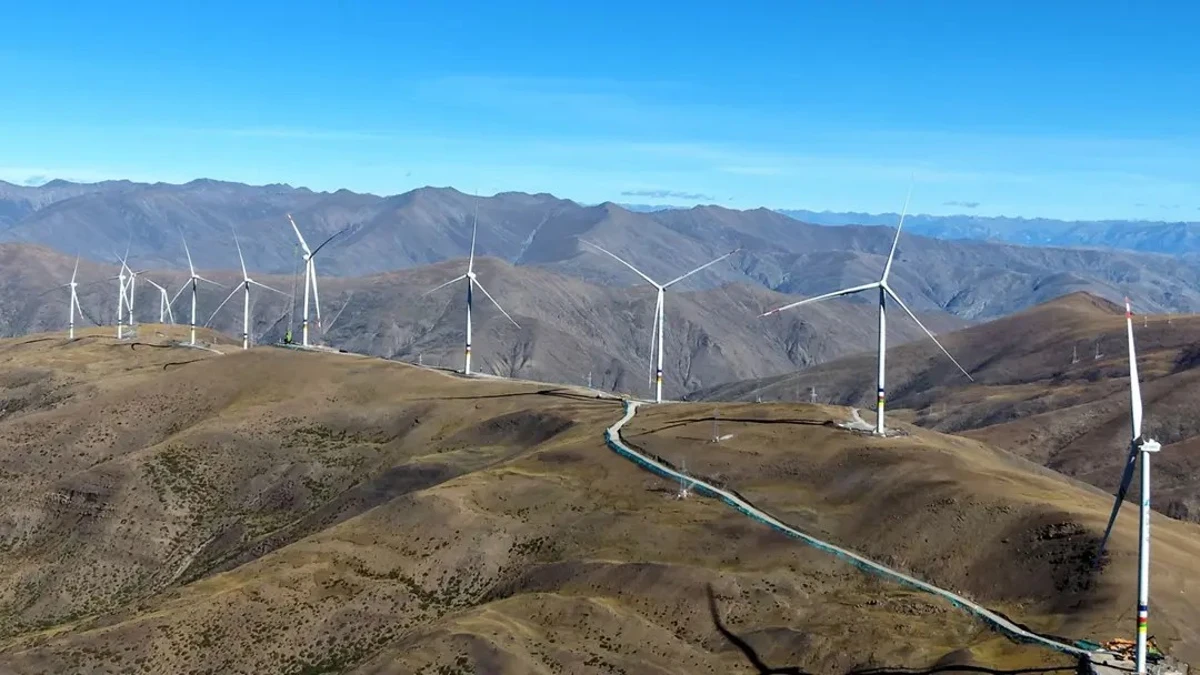
China has switched on the first phase of what is being described as the world's highest-altitude wind farm, located in the Tibet Autonomous Region, known in China as Xizang.
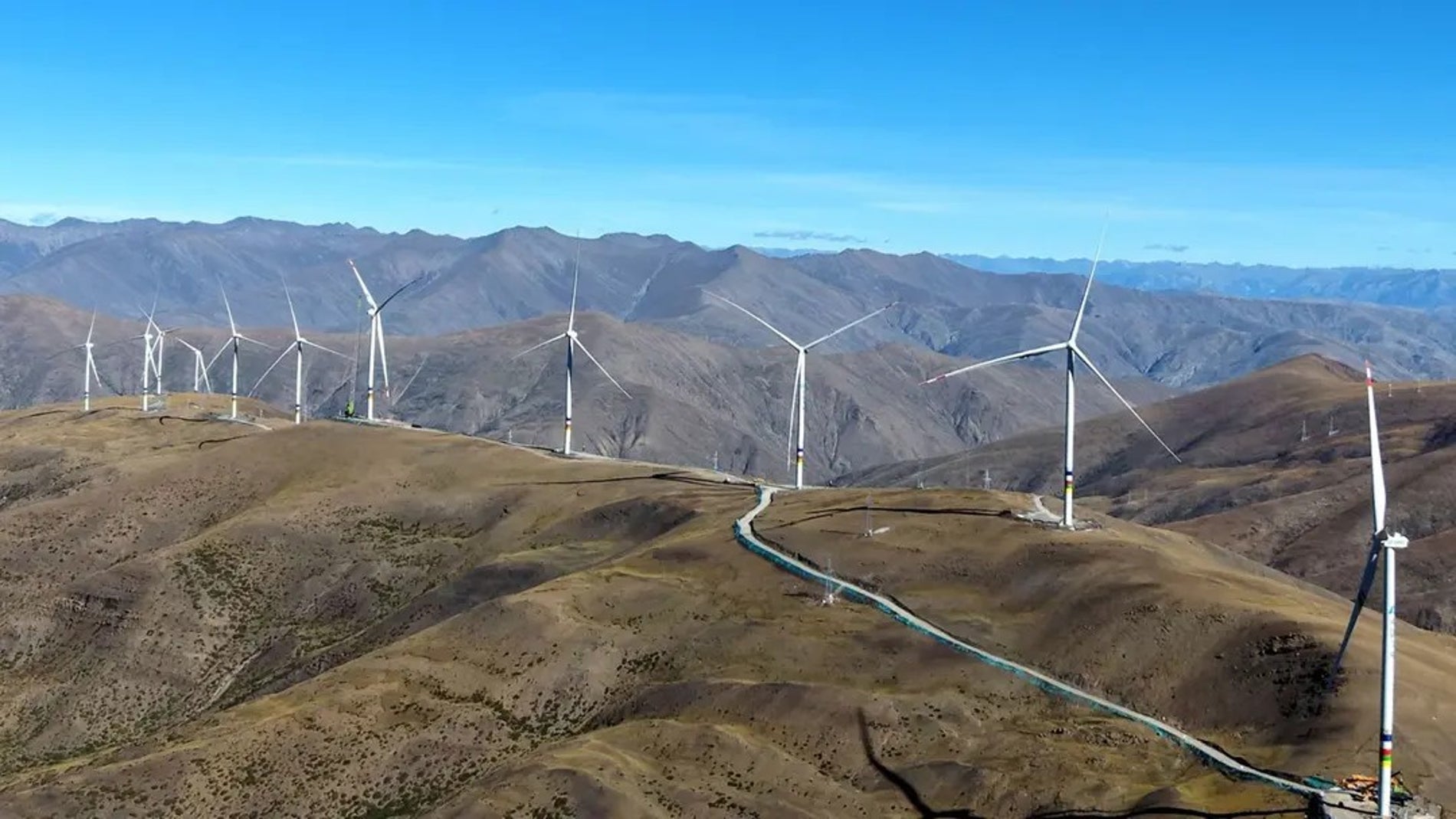
The Qiongjie wind farm sits in Shannan City, a prefecture-level city in southern Tibet, at an altitude of around 5,100 metres (16,732 feet) above sea level. Its first phase now has 24 turbines running, each with a capacity of 6.25 megawatts, together delivering 150 megawatts of power for this winter.
The full project is designed to reach a total installed capacity of 500 megawatts once finished, enough to supply electricity to around 175,000 homes across China.
A pilot project for Tibet's power grid
The wind farm is being built and operated by the state-owned China Huadian Corporation Ltd, one of China's major state power generation groups, as part of a pilot programme meant to bring stable, clean energy to the Tibet Autonomous Region. It is described as the largest wind power project in the region.
Project representatives said the plant was of near-vital importance to the area, because solar power output drops to zero overnight there, while hydroelectric generation falls to a minimum during the winter months as water freezes. The Qiongjie wind farm is intended to fill that gap in generation and add stability to the grid, using what officials describe as the most sustainable option available within a protected natural area.
Representatives of the project said they expect it to generate about 394 million kilowatt-hours of electricity every year once complete, enough to cover the planned 175,000 households, while cutting around 330,000 tonnes of carbon dioxide emissions annually.
Giant turbines built for extreme winds
The turbines stand on exposed mountain ridges, where wind speeds exceed 8 metres per second. Individual turbine sections weigh about 101 tonnes each, with blades measuring 97.3 metres in length and hubs rising as high as 113 metres above the ground.
Building at the roof of the world
The trade publication Interesting Engineering reported that engineering teams had to overcome a long list of obstacles to build at such an extreme altitude, in the Himalayan mountain range that runs along Tibet's southern border. Beyond the difficulty of transporting the turbines and construction material up to the site, the thin oxygen at 5,100 metres makes any physical task exhausting, and raises the risk of altitude sickness for workers.
China prioritised construction work on the site in recent months in order to avoid the harshest weather conditions. Temperatures at the location can swing by more than 20 degrees, with sudden changes that led engineers to install weather stations on site. Those conditions leave a workable construction window of only about five months each year.
Despite that, the first turbine was completed on 18 June 2026, and the first batch of 24 units has since been installed, tested and put into production in time for this winter, all within roughly four months of work.
New technology for high-altitude construction
To build at that height, China has designed new lifting and hoisting technology, which engineers say creates a model for future high-altitude wind projects. The turbines also rely on smart systems that let them adjust to weather conditions using AI-based forecasts, and that monitor ice build-up on the equipment to prevent damage to their materials.
Further phases of the Qiongjie wind farm are planned over the coming years as the project works toward its full target of 500 megawatts of installed capacity.
What happens next
Further phases of the Qiongjie wind farm are planned over the coming years as the project works toward its full target of 500 megawatts of installed capacity.
Test yourself
Where is the Qiongjie wind farm located?
How many turbines are running in the wind farm's first phase?
Which company operates the Qiongjie wind farm?
Have your say
Do you think high-altitude wind projects like Qiongjie are a good model for future clean energy expansion?
Where it happened
Shannan, Tibet Autonomous Region, China