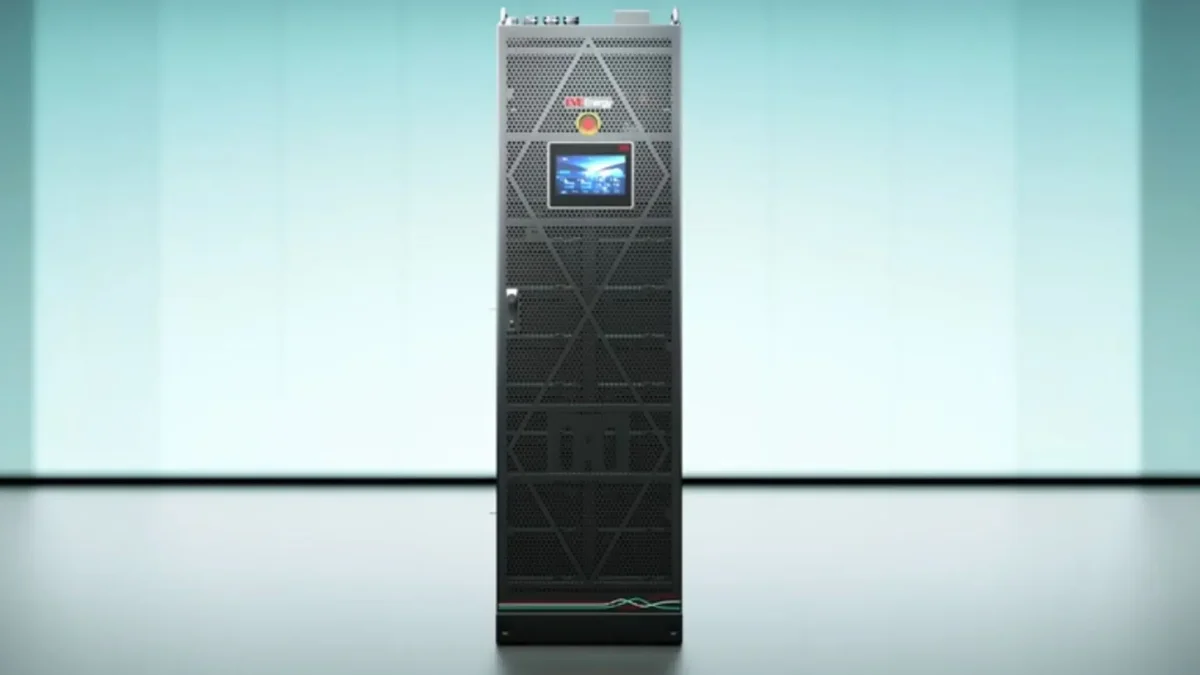
Chinese battery maker EVE Energy has unveiled a grid-scale battery system capable of storing 5 megawatt hours (MWh) of electricity, enough, by one comparison, to cover the annual power use of a typical home for almost two years. The company presented the system, called the 1P 5MWh ESS, at the RE+ 2026 trade show in Las Vegas.
EVE Energy is one of China's largest battery manufacturers. The system fits inside a standard shipping container roughly six meters long and is designed to stabilize electrical grids and meet the surging power demands of artificial intelligence data centers, rather than to serve as a home battery or a backup unit for an isolated house.
How the comparison with a home works
A megawatt hour equals 1,000 kilowatt hours (kWh), meaning the battery's 5 MWh capacity is equivalent to 5,000 kWh. According to 2025 residential consumption data compiled from Spain's National Commission on Markets and Competition (CNMC), a typical Spanish household uses about 2,637 kWh a year. Dividing the battery's capacity by that figure gives roughly 1.9 years, meaning the stored electricity could theoretically cover the annual consumption of nearly two households for a year, or one household for close to two years.
That comparison is theoretical. A real installation would involve conversion losses, discharge conditions and energy reserved for running the system itself.
Capacity versus power
EVE Energy distinguishes between two figures that are often confused: megawatt hours measure how much energy a battery can store, while megawatts measure power, or how fast that energy can be delivered. The company states the 1P 5MWh ESS has a capacity of 5 MWh and a rated power output of 5 MW, with peaks of up to 1.2 times that figure.
Under ideal conditions, that means the battery could discharge its full 5 MWh in about an hour if operating at 5 MW. Having a full reservoir is not the same as having a pipe fast enough to empty it quickly, and both figures matter for understanding how the battery performs.
Built for AI data centers
The system's main application addresses a problem tied to the growth of artificial intelligence. Data centers house thousands of servers and computing accelerators that need a continuous electricity supply, and their demand can shift rapidly, forcing both the facilities and the grids that supply them to respond to sudden fluctuations.
A large battery can store electricity when it is available and release it when demand rises, while also helping regulate grid frequency, a variable essential to keeping generation and consumption in balance.
Performance claims
EVE Energy says the system can reach 20,000 equivalent cycles in frequency-regulation applications and states an efficiency of 93.6%. The company also says it requires 20% less auxiliary energy than its reference configuration. These figures come from the manufacturer and have not been verified by an independent evaluation. The battery uses 315 amp-hour cells developed specifically for this type of application.
Backup systems for data centers
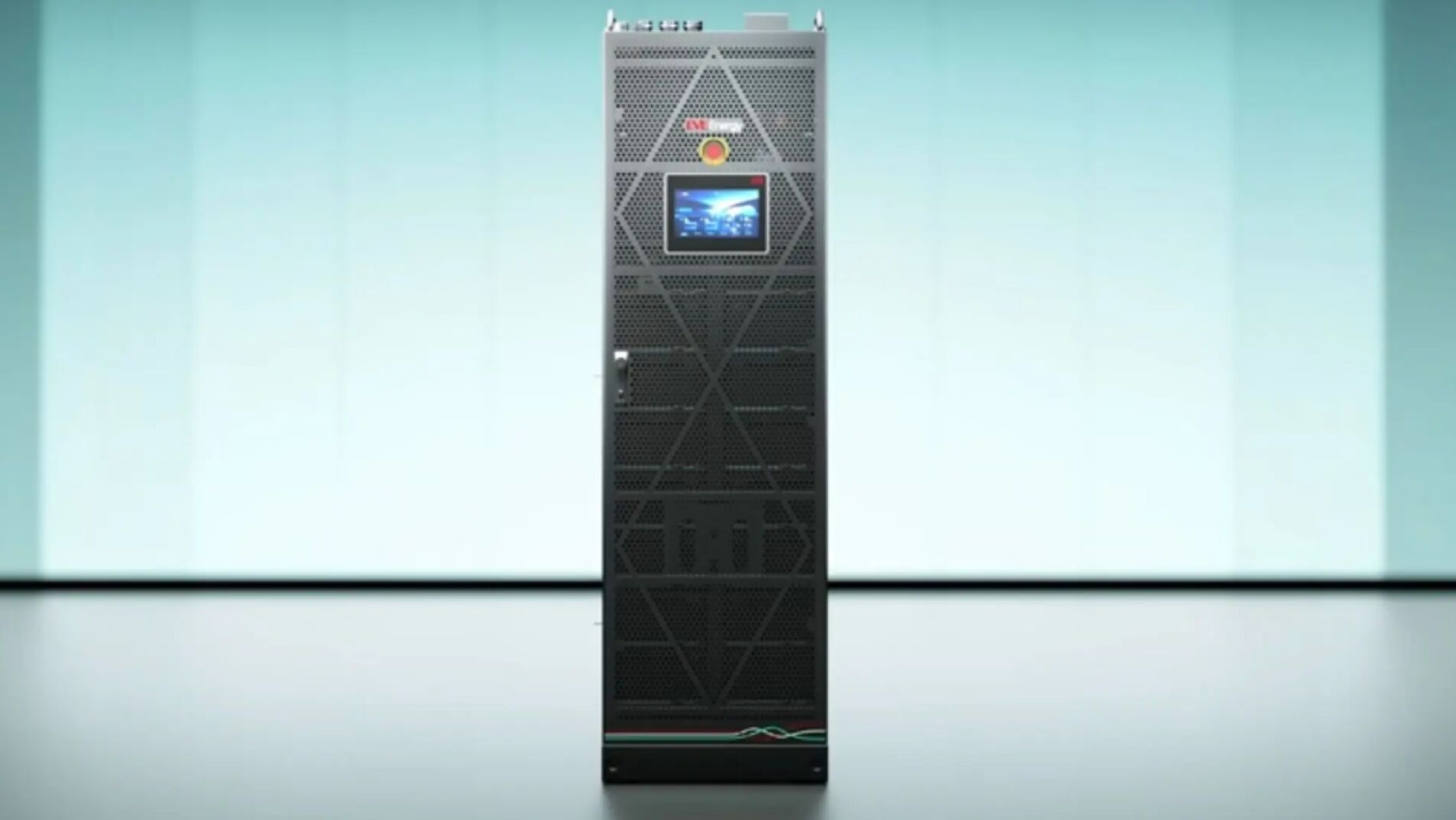
EVE Energy's lineup extends beyond grid-scale storage. The company also presented a backup cabinet capable of delivering 660 kW for five minutes, and a system installed directly in server racks that can switch to backup power in under two milliseconds. The three solutions are complementary: one connects at the grid interface, another operates within the data center's electrical distribution, and the third sits alongside the computing equipment itself.
The logic behind this layered approach is that working with artificial intelligence requires more than a large supply of electricity. That power must also arrive at precisely the right moment, since a sudden fluctuation or interruption could halt computing operations.
What the battery does and does not do
The so-called "apocalypse battery" will not keep a city running for weeks and is not designed to replace a power plant. Its significance is narrower: it illustrates how energy storage systems are becoming a core part of the infrastructure underpinning the digital economy, as artificial intelligence may appear to run in the cloud, but behind every response are buildings full of machines that need large amounts of electricity and cannot afford to go dark.
Test yourself
Where did EVE Energy present its 1P 5MWh ESS battery?
What is the main intended application of the battery, according to EVE Energy?
What efficiency rate does EVE Energy claim for the system?
Have your say
Do you think large-scale battery storage is the right solution for powering AI data centers?
Where it happened
Las Vegas, United States