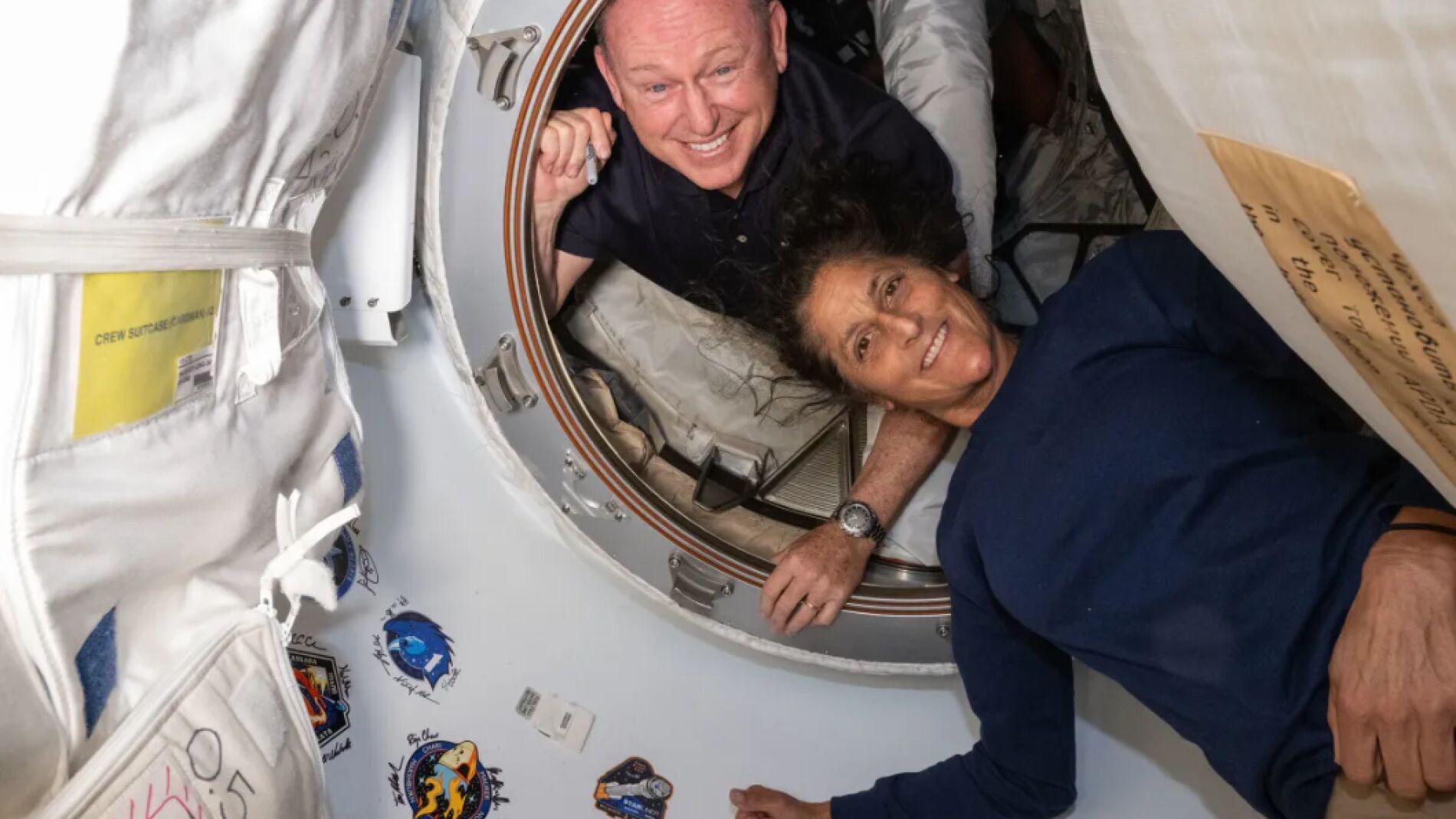
NASA astronaut Commander Butch Wilmore has revealed that he feared for his life after five thrusters failed on Boeing's Starliner capsule during its approach to the International Space Station, resulting in a nine-month stay in orbit.
Speaking on The Jeremy Boreing Show, Wilmore described how control of the spacecraft deteriorated rapidly as the thrusters fired erratically, producing a sound akin to a machine gun and stranding him and fellow astronaut Sunita Williams aboard the space station.
The mission had originally been scheduled as an eight-day flight in July 2024. However, as the capsule approached the orbiting laboratory, four of its eight thrusters failed, a fifth stopped working shortly afterwards, and several others produced less thrust than expected.
Starliner thruster failure during approach
Wilmore said that the loss of thruster control affected one of the six degrees of freedom required to maneuver a spacecraft in orbit. He stated that such a failure had never occurred in the history of human spaceflight, adding that the spacecraft did not behave like it had the previous day and sounded different, which increased tension inside the cabin.
In spaceflight maneuvering, six degrees of freedom refer to the ability of a spacecraft to move along three translation axes, forward and backward, left and right, and up and down, as well as rotate across pitch, roll, and yaw axes. Precise thruster control across all axes is required to align a spacecraft with a docking port on an orbiting station.
Wilmore recalled thinking during the approach that if the crew could not reach the space station, he was not sure they could return to Earth in that condition, admitting that the thought of not surviving entered his mind.
Early doubts over safe return
Although NASA publicly maintained for weeks that the Starliner capsule could bring the astronauts back, Wilmore confessed that he had already assumed prior to docking that a return on the spacecraft would not be possible. He said he realized at the time that if they arrived and docked, they would not be returning on that vessel and would remain on the station for a while.
NASA did not make the official decision to return Starliner without a crew until a month later, but Wilmore stated that the crew was aware of the situation from the beginning.
Wilmore explained that there was no way to verify or repair the thrusters while in orbit, noting that astronauts cannot conduct a spacewalk to inspect them because the components were not designed for orbital maintenance. He also expressed frustration regarding certain Starliner program procedures and operational decisions that he had not been aware of, without specifying which procedures were involved.
Uncrewed return and SpaceX mission
The International Space Station is a microgravity research facility orbiting Earth, operated jointly by international space agencies including NASA, the United States federal agency for civilian spaceflight. Boeing developed the CST-100 Starliner under NASA's Commercial Crew Program to transport astronauts to low Earth orbit alongside commercial services provided by SpaceX.
Following NASA's evaluation of the thruster issues, the Starliner capsule detached from the station and returned to Earth uncrewed in September 2024. Wilmore and Williams remained aboard the space station until March 2025, when they were brought back to Earth by the SpaceX Crew-9 mission.
Reflecting on the nine-month stay, Wilmore said he maintained his composure throughout the experience. He acknowledged feeling frustrated at times and admitted to being scared once or twice, but said that one must put fear in its place and keep moving forward.