

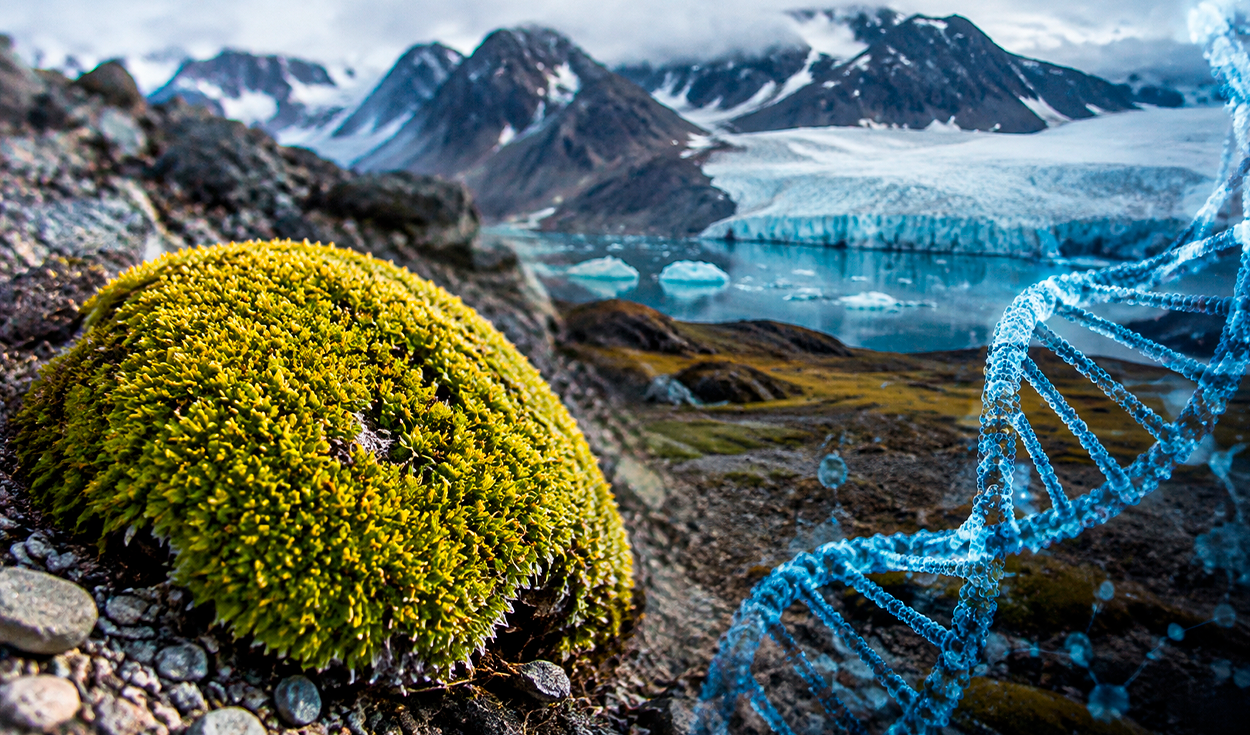
Chilean researchers Eduardo Castro-Nallar and Claudio Meneses have led an international scientific team to reconstruct the complete chromosome-scale reference genome of the Antarctic pearlwort, Colobanthus quitensis. The study on the species, which is one of only two native vascular plants in Antarctica capable of enduring drought and freezing temperatures, was published on July 15, 2026, in the journal Genome Biology and Evolution.
The achievement marks the first chromosome-scale assembly of an Antarctic flowering plant. The team created POLARIX, a genetic reconstruction containing 887.1 million base pairs distributed across 40 chromosome-scale structures. The plant has 80 chromosomes in total, displaying a tetraploid condition.
Using PacBio HiFi and Hi-C tools, the researchers achieved 99 percent accuracy in conserved genes under BUSCO evaluations and 98.4 percent completeness using k-mers. The analysis identified 40,762 protein-coding genes, with known functions assigned to 95 percent of them. The team also fully deciphered the chloroplast sequence of 151,314 base pairs containing 113 genes, as well as a draft mitochondrial sequence.
Genetic structure and technological applications
The study revealed that repetitive elements make up 69.9 percent of the genetic material, with LTR retrotransposons being particularly abundant. Co-author Cristóbal Galbán said that completing the assembly was equivalent to solving a jigsaw puzzle where only scattered pieces were known before. He noted that the baseline map is now available in open scientific repositories.
An abundance of gene duplications points to an ancestral tetraploid polyploidy in the plant. Researchers said the map provides an exceptional opportunity to investigate the evolutionary changes that allow flowering plants to tolerate polar climates. The platform allows scientists to evaluate population diversity, compare adaptive lineages, and examine how the species colonized hostile ecosystems.
Impact on agricultural research
The genetic map will allow detailed analysis of cellular responses to low temperatures and abiotic stress. Former chloroplast sequencing and fragmented transcriptomic studies existed previously, but POLARIX establishes continuity in nuclear DNA research.
Researchers noted that findings from the polar flora could support applied studies aimed at developing more resilient large-scale crops. Decoding the survival metabolic pathways of Colobanthus quitensis can provide biotechnological solutions to strengthen global food security against ongoing climate variability.



