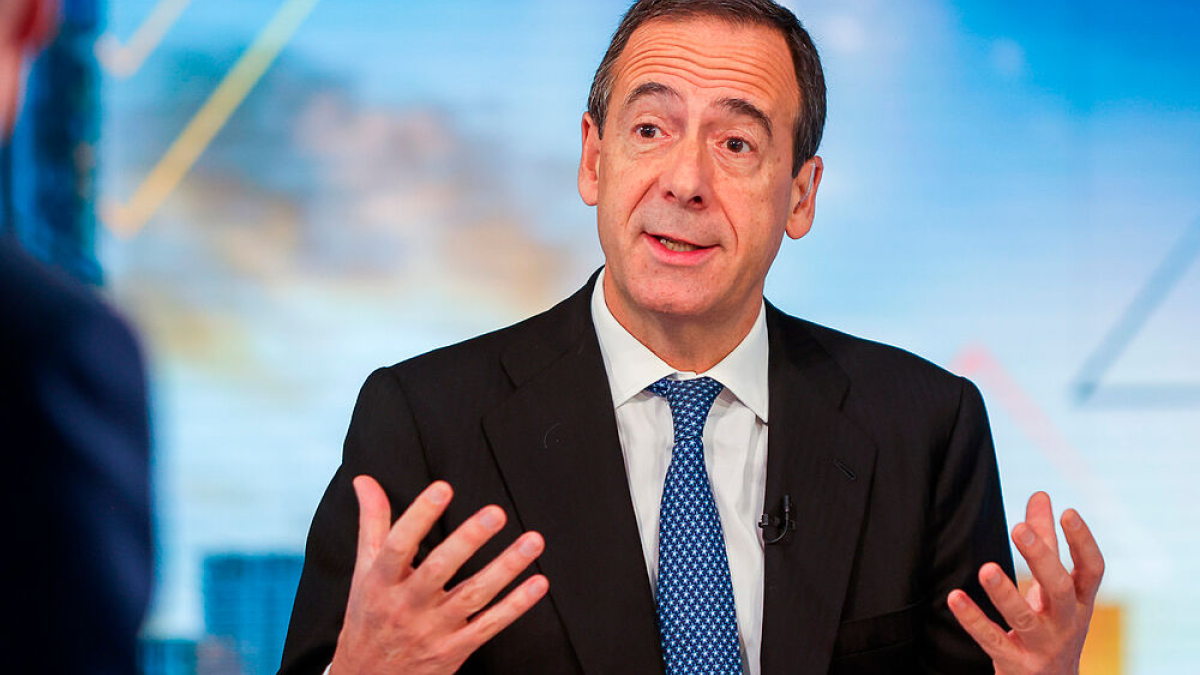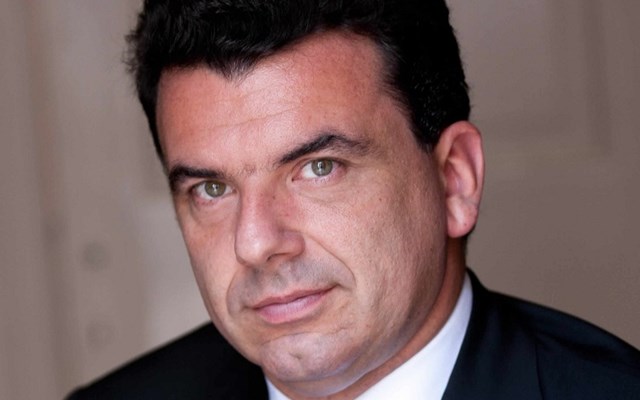
Jensen Huang's hurried return as Nvidia's chief executive has left the United States worse off than before his brief removal, according to an opinion piece by lawyer Georgios I. Matsos published on Capital.gr. Huang was away from Nvidia for 11 days before being reinstated.
Matsos writes that the market turmoil the United States experienced during those 11 days shows how deeply the company depends on a single person. He points to a 2023 statement in which Huang said: "Our company was built so that I know how to run it. And so for as long as I'm running it, that's all that matters."
Huang co-founded Nvidia in 1993 and has run the company as chief executive ever since, building it into the world's leading maker of the specialized chips that power artificial intelligence systems.
Matsos argues the statement describes a management model built entirely around one individual, something he says the recent turmoil confirmed. He asks what would happen to Nvidia if Huang were seriously injured in a car accident or fell suddenly and gravely ill, writing that the prospect unsettles Americans unused to depending on a single person, particularly one from outside the country's own cultural background.
He adds that Huang, now 63 and after 33 years running Nvidia the same way, is unlikely to restructure the company now so that it can operate without him.
Political hand in Huang's removal and return
In an earlier commentary published on 17 November 2026, Matsos had already noted what he described as the decisive involvement of Secretary of State Marco Rubio in altering a CIA report concerning an extramarital affair involving Huang. He wrote at the time that it was unclear whether President Donald Trump knew about the move.
Matsos says the likelihood that Trump was aware is reinforced by the fact that the president himself proposed Apple chief executive Tim Cook as a replacement for Huang. He argues that someone as hands-on as Trump would be unlikely to have had no role in the process that led to Huang's removal.
Trump has since said that he personally closed the deal to bring Huang back, a claim Matsos says is aimed at claiming political credit for the reinstatement. Matsos contends Trump did not hold that view at the outset, and that the president, and certainly his administration, likely played a part in Huang's original removal. He argues the episode raises a broader question about whether investors should trust a country where company leaders' positions depend so heavily on the whims of politicians.
Nvidia's role in the AI boom
Matsos's third point concerns Nvidia's broader role in the artificial intelligence industry. He writes that Nvidia's chips and software have driven the rapid growth of AI, and that the company's profits have funded, and helped keep afloat, numerous smaller and larger technology firms.
He cites Anthropic's initial public offering, which he describes as the largest IPO in history, asking whether it could have happened without Nvidia's AI chips.
Huang's Taiwanese background and management style
Matsos attributes Huang's success to what he calls a Taiwanese, or Chinese, way of thinking and management. Huang was born in Taiwan and moved to the United States at the age of 10, making him, in the author's view, culturally Chinese.
According to the piece, Huang has told Nvidia staff that because they had become too wealthy, the only way to motivate them to keep working was to humiliate them. Despite this, Matsos notes that Nvidia's employees rank among the most satisfied in the United States.
He draws a parallel with Taiwan Semiconductor Manufacturing Company, the major contract chipmaker, writing that the same Taiwanese work culture allows it to manufacture AI chips with unmatched success, a result he argues has not been replicated in the United States.
Matsos concludes that Huang's rapid reinstatement demonstrates the technological, economic, political and moral decline of what was until recently the dominant American Anglo-Protestant model, calling it an overall and irreparable defeat for the United States.
Test yourself
According to the opinion piece, how long was Jensen Huang away from Nvidia before returning?
Who did Donald Trump reportedly propose as a replacement for Huang?
What does the author say Huang told Nvidia staff who had become too wealthy?
Have your say
Should a major company's success depend so heavily on one executive?