French train manufacturer Alstom saw its shares plunge 28 percent on Monday morning after slashing its annual profit outlook and warning that it expects to burn 1.5 billion euros in cash this fiscal year.
The Paris-based group drastically lowered its profitability targets for the 2026-2027 financial year closing at the end of March, reducing its adjusted operating margin guidance to 1 percent from an earlier estimate of roughly 6.5 percent. Management also abandoned its previous expectation of generating positive cash flow over the twelve-month period, projecting instead a cash drain of 1.5 billion euros.
Alstom also trimmed its organic revenue growth outlook for the full year. Sales on a comparable basis are now forecast to expand between 2 percent and 4 percent, compared to the previously targeted rate of around 5 percent.

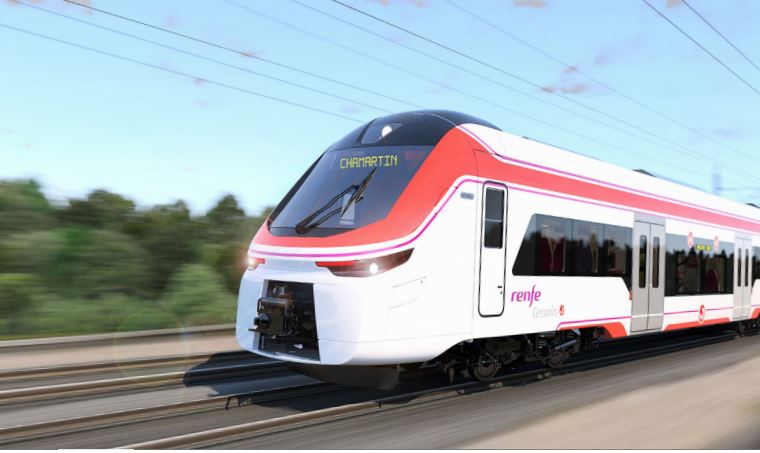
Executive leadership attributed the massive downgrade to serious manufacturing and testing problems on Coradia Max, an electric double-deck regional train platform ordered by several railway operators in Germany and Central Europe.
Alstom is one of the largest rail transport manufacturers in the world, best known as the developer of France's high-speed TGV rail network as well as urban metro lines and signalling systems worldwide. However, the engineering giant has repeatedly struggled in recent years to convert a swelling order book into predictable financial returns.
Project Reviews and Manufacturing Bottlenecks
Chief executive Martin Sion, who took charge of Alstom in April after leaving aerospace group ArianeGroup, initiated a comprehensive operational review shortly after his arrival to lift performance across the company.
As part of that effort, Sion appointed specialized squads of engineering experts, which he described as tiger teams, tasked with combing through critical projects to detect risks and implement technical solutions.
On the Coradia Max platform, the review teams discovered that factory production schedules had to be postponed following technical malfunctions that emerged during the quarter running from April to the end of June. Sion told financial analysts that specialists then realized that testing procedures had to be recalibrated to comply with strict homologation and validation standards. He explained that these technical hurdles resulted in commercial entry-into-service delays for passenger operations.
The operational difficulties have disrupted six separate Coradia Max customer programmes. According to investment bank Citi, those six troubled rail contracts represent approximately 5 billion euros in Alstom's total order book.
Due to the factory bottlenecks, Alstom manufactured only 1,860 rail cars during the first half of its 2026-2027 fiscal year. That output trailed both the production achieved a year earlier and internal company ambitions. Chief financial officer Bernard Delpit stated that the slowdown reflected the reduced manufacturing cadence across the Coradia platform.
Following the first-half shortfall, Alstom lowered its full-year rail car delivery objective to 4,000 units, down from its earlier target range of 4,000 to 4,500 units.
Cash Flow Pressures and Milestone Payments
The manufacturing delays have directly disrupted cash receipts by postponing customer payments tied to project delivery milestones. Analysts at Oddo BHF noted that the worsening cash drain was directly caused by schedule slippage, explaining that delays in technical certification and commercial commissioning, especially on Coradia Max, have pushed critical milestone payments into subsequent financial years.
Preliminary financial results for the first fiscal half ending in late September demonstrated the severe impact of these execution problems on company finances. Alstom burned 1.248 billion euros in cash during the six-month period alone.
The company reported an adjusted operating margin of minus 4 percent for the first half, swinging sharply from a positive 6.4 percent recorded in the same period of the prior financial year. Analysts at Citi pointed out that this collapse was driven by a slump in gross profit margins caused by heavy overhead costs and significant commercial penalties incurred on the Coradia platform.
Two Billion Euro Deleveraging Plan
Confronted with the forecast 1.5 billion euro cash deficit, Alstom is preparing emergency balance sheet measures to safeguard its investment grade credit rating. Maintaining a non-speculative rating from credit agencies is essential for the company's financial survival and commercial competitiveness, because transport authorities require substantial bank guarantees before awarding rolling stock contracts.
Sion announced a debt reduction programme worth approximately 2 billion euros designed to preserve that credit rating. He explained that the package will incorporate both organic measures and inorganic transactions, indicating that Alstom has not ruled out asset disposals or a capital increase to fortify its equity base. Management aims to execute the deleveraging plan by September of next year.
Oddo BHF stated that Alstom has several strategic avenues available to repair its finances, including further asset sales, a rights issue, or issuing hybrid debt instruments such as perpetual bonds or convertible bonds. The brokerage added that participation by the French government in any inorganic transaction could also be considered.
Repeated Warnings Shake Investor Confidence
Following the downgrade, Oddo BHF placed its recommendation on Alstom shares, which had stood at outperform, under formal review. The brokerage warned that lingering balance sheet uncertainty and the urgent steps required before September to prevent a credit rating downgrade by Moody's would weigh on the stock for months.
Oddo BHF added that issuing two consecutive profit warnings within a span of a few months would do little to rebuild market trust. Alstom had already lowered its outlook in April, prompting a 27.15 percent drop in its share price due to execution problems on other rail contracts.
The sell-off on Monday recalled an earlier crash in October 2023, when Alstom issued a massive profit warning that wiped 37.6 percent off its market value in a single trading session. That decline marked one of the steepest single-day losses ever recorded by a constituent of the benchmark CAC 40 index in Paris.
Commercial Order Growth and Execution Risks
The operational difficulties stand in contrast to Alstom's commercial momentum in winning new rail contracts worldwide. The group booked 11 billion euros in new orders during the first half, representing a 5 percent increase on a comparable basis compared with the same period last year.
The persistent gap between commercial success and earnings disappointment highlights the operational risks inherent in large-scale train manufacturing. In the rolling stock industry, companies must manage complex long-term projects where even minor technical setbacks quickly generate heavy financial penalties and deferred milestone receipts. That business model demands rigorous factory execution, an area where Alstom has stumbled repeatedly in recent years.
Despite the setback, Sion told financial analysts on Monday that he hoped the execution problems affecting the Coradia Max platform were now behind the company.