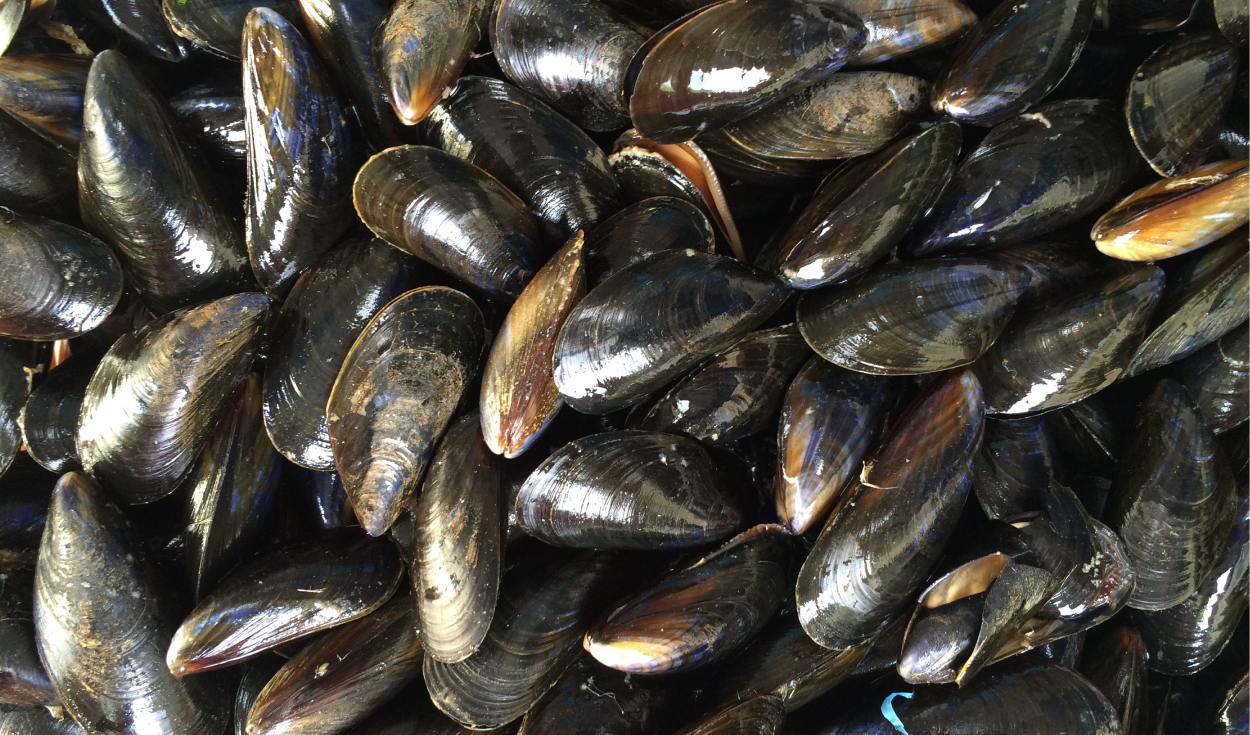
An international team of researchers has discovered microplastics in deep-sea mussels and snails living near hydrothermal vents in the Pacific and Indian Oceans. The study, published in the journal Water Research, shows that human plastic pollution has reached some of the most isolated environments on Earth.
Scientists examined 12 specimens belonging to four distinct species collected at depths of about 2,000 meters. Plastic particles were detected in 11 of the 12 animals, representing 92 percent of the samples analyzed. The organisms lived near hydrothermal vents that spew extremely hot, mineral-rich water from within the crust of the Earth.
Movement and persistence of deep-sea plastics
Researchers explained that microplastics begin their journey at the ocean surface, where floating plastic becomes heavier as microorganisms and algae attach to it. Organic matter, including feces from fish and zooplankton, further accelerates the descent of the particles toward the seafloor. Once near the seabed, underwater currents and oceanic canyons concentrate the plastic in specific zones.
Study co-author Se-Joo Kim said that once the particles reach the seafloor, they stay there. Kim explained that the lack of light, heat, and oxygen significantly reduces the chemical processes that normally degrade plastic. She noted that material reaching the ocean floor accumulates for periods much longer than a human lifetime.
The study revealed differences in how microplastics accumulate within different species. Deep-sea snails contained higher concentrations of microplastics in their digestive systems, likely because they feed on bacterial biofilms covering the hydrothermal vents. In contrast, mussels showed a more uniform distribution across their gills and digestive organs due to their filter-feeding behavior.
Expedition methods and ocean comparisons
The samples were collected during two scientific expeditions conducted between 2016 and 2019 using a remotely operated underwater vehicle. The first mission took place in the North Fiji Basin in the southwestern Pacific Ocean, while the second was carried out in the Indian Ocean. Researchers carefully captured organisms inhabiting the areas surrounding the hydrothermal vents.
To prevent external contamination, scientists followed a strict protocol by immediately wrapping each specimen in aluminum foil and freezing it at minus 80 degrees Celsius. In the laboratory, specialists wore cotton clothing and used sterilized tools and glass containers, avoiding plastic materials throughout the analysis.
The study marks the first comparison of microplastic contamination in deep-sea animals across two different oceans. Specimens from the Indian Ocean contained up to 14.7 times more microplastics than those collected in the southwestern Pacific Ocean. Authors suggested the difference may be linked to large amounts of plastic waste flowing into the Indian Ocean from coasts and rivers, as well as monsoon winds driving pollutant transport.
Scientific evaluation and open questions
Ana Carolina Ronda, a biochemist at the Argentine Institute of Oceanography who was not involved in the study, said that a direct link between surface plastic volume and seabed accumulation has not yet been established. Speaking to Mongabay, Ronda questioned whether the plastic stems from local discharges or travels from other regions. She added that research must determine if these particles alter the biological function of deep-sea animals, noting that the findings open many new questions.