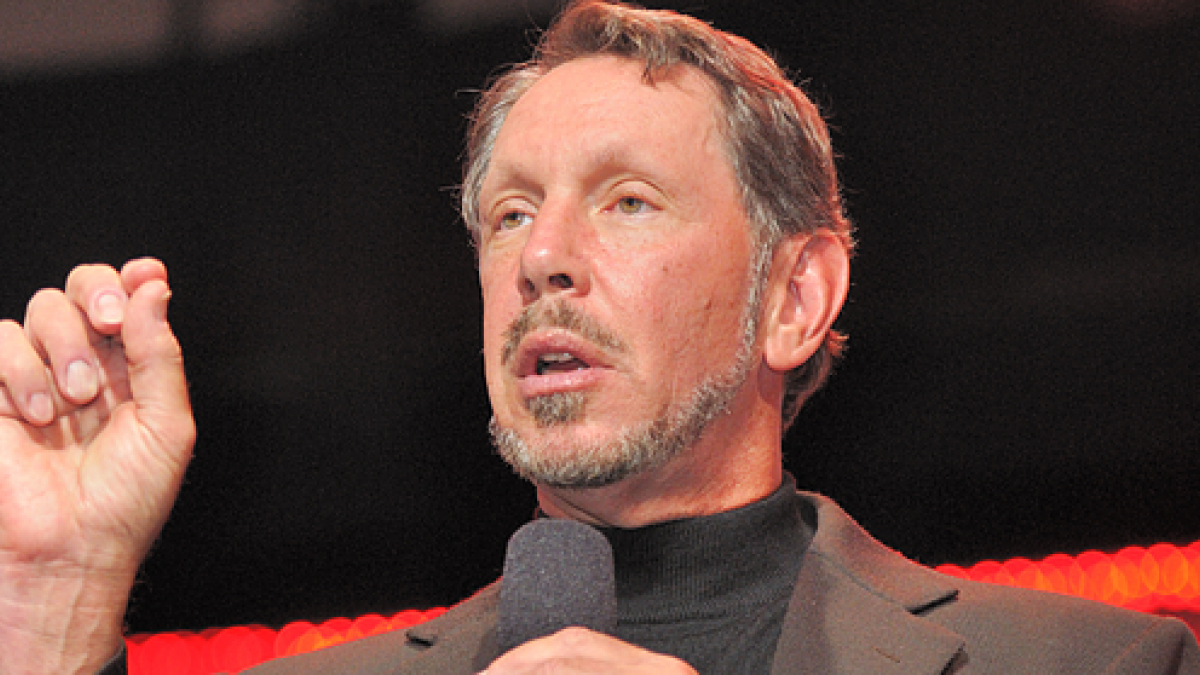
David Ellison and his father, Oracle founder Larry Ellison, have amassed roughly $87 billion (78.8 billion euros) in debt across their entertainment businesses to fund a buying spree that handed them control of Paramount and Warner Bros Discovery, according to the Financial Times. The figure is described as unprecedented for Hollywood today.
In under two years, the Ellisons went from being credited as producers on the Mission: Impossible franchise to owning Harry Potter, Superman, CBS and CNN. The debt load could now limit David Ellison's ability to attract talent and compete with better-resourced rivals such as Netflix, Disney and Google's YouTube.
Lenders, executives, former executives and rivals in Los Angeles are watching closely to see how the Ellisons and Ynon Kreiz, the family's trusted executive at Skydance, manage the load, and whether it will test the limits of the family fortune. The debt is likely to force deep cuts at the merged company and leave little room for error, particularly after weak 2026 box office results and a 2026 slate that depends heavily on sequels.
Wall Street steps in
The financial strain is already visible in credit markets. A Financial Times analysis of thousands of investment-grade bonds found that Skydance and Oracle issues accounted for nearly half of the 100 bonds carrying the highest risk premiums over U.S. Treasuries.
Apollo Global Management and Pimco have taken on billions of dollars of Skydance debt, while banks including Citigroup and JPMorgan Chase have extended personal loans backed by Oracle shares owned by Larry Ellison. Those loans helped rebuild the family's finances after it contributed about $14 billion to close the Warner acquisition, according to a person familiar with the matter.
Sovereign wealth funds supplied $24 billion in equity, and investment firm RedBird Capital added $4 billion. Elon Musk, chief executive of Tesla and SpaceX, contributed around $1 billion toward the offer, according to two people familiar with the deal. David Ellison confirmed Musk's investment last week, calling it a vote of confidence and saying it was an honor to have him as a shareholder.
A fortune under pressure
Although $1 billion is small relative to the overall deal, the need to bring in Musk highlights the limits of even the Ellisons' fortune against the scale of their Hollywood buildout. Bloomberg data shows the family's net worth has fallen by more than half from last year's peak, driven by a drop in Oracle shares, and now stands at around $150 billion.
A lender to Ellison companies said Larry Ellison was "nowhere near the brink of disaster" but had pushed his personal borrowing capacity to the limit, betting heavily on a strategic pivot toward artificial intelligence infrastructure while simultaneously taking on the entertainment acquisitions.
Oracle's own debt surge
Oracle has raised another $10 billion in debt this month, and S&P Global downgraded its credit rating to one notch above junk. The company now carries roughly $500 billion in debt and other financial commitments.
Skydance issued $57 billion in debt during a market sell-off as executives rushed to close the Paramount acquisition in October, leaving billions of dollars of Paramount debt unpaid. Those bonds rank below other Skydance debt and would absorb most losses in a default. Many of those bonds now trade at discounts of 20% to 50%, with bonds maturing in 2040 changing hands at just 56 cents on the dollar earlier this week. Investors now demand a 7.8 percentage point premium over Treasuries to hold that debt, up from 4.3 points in September, a sign of fast-deteriorating confidence and the possibility of a debt restructuring. Higher-priority Skydance bonds have recovered since October, though the company's junk-rated debt overall still trades below its issue price.
Skydance chief financial officer Dennis Cinelli told the Financial Times the volatility reflected broader financial market swings, describing the debt as fundamentally solid and saying the company intended to repay it in full.
Cost cuts and cash burn
Oracle and Skydance executives have promised both companies will begin generating large amounts of cash in the coming years, even as huge sums continue flowing out. Oracle burned through $23.7 billion in cash in the fiscal year ended in May and another $5.4 billion last quarter. The company says it is nearing peak spending and told investors in October that the heavy outlays would end in early 2028, with more than $30 billion in free cash flow expected in the 12 months to May 2029. Executives have also said they will not need new debt or equity issuance to fund current AI investments. Even so, the cost of insuring against an Oracle default has more than tripled this year. Oracle declined to comment.
Skydance has launched a $6 billion cost-cutting plan, aiming to consolidate office space, renegotiate supplier contracts and reduce its 56,200-person workforce. The company offered voluntary severance last month, according to a person who received such an offer. One lender said the entire deal depends on synergies materializing. Kreiz told investors this month the company had ample room to cut duplicated costs, pointing to the task of integrating two global streaming platforms, two film and TV studios, two television network portfolios and overlapping corporate functions within a cost structure exceeding $50 billion a year.
Diverging forecasts
Ellison and Kreiz expect Skydance to generate $10 billion in annual cash flow by 2030 and to cut debt to roughly three times earnings by 2029. Wall Street analysts are less optimistic, forecasting free cash flow of $8.3 billion in 2030 and leverage still above four times earnings in 2029. Cinelli said the current management team had already met its targets for Paramount, including revenue growth, accelerating direct-to-consumer business and exceeding adjusted EBITDA and synergy goals, and would apply the same execution to the merged company.
Kreiz, the former chief executive of Mattel, is leading the cost-cutting effort. One person who worked with him described him as someone who always carries an abacus and focuses exclusively on the numbers. A person close to Ellison said the task of finding levers to reduce debt falls to Kreiz. Asset sales are reportedly not part of the plan, partly because cable channels such as CNN, MTV and Nickelodeon, which generate the bulk of the company's cash, would not fetch high enough offers. Skydance president Andy Gordon told the Financial Times the capital structure was solid and would allow debt reduction under the operating plan without additional capital or divestitures.
Risks still ahead
Reaching the $6 billion synergy target may prove difficult. A Skydance executive said Google could harden its negotiating position in two years when contracts to distribute Skydance channels through YouTube TV come up for renewal, and that even thousands of layoffs would not be enough to hit the savings target. Another lender warned Skydance also faces difficult negotiations with the National Football League over broadcast rights in the coming years, deals that could absorb cash that would otherwise go toward paying down debt. Skydance must also revive its film studios after weak 2026 results, since movies remain a key draw for subscribers to Paramount+ and HBO Max. Ellison has defended next year's slate, pointing to new entries in the Lord of the Rings, Superman, A Quiet Place and Ocean's franchises.
Shares pledged as collateral
The Ellisons have used their Oracle stake as collateral for their investments. In a filing with the U.S. Securities and Exchange Commission in September, Larry Ellison disclosed he had pledged about 413 million Oracle shares, worth roughly $45 billion, to back his own loans. Other filings show his trust used millions of Oracle and Tesla shares as collateral for credit from JPMorgan, Citi, BNP Paribas, UBS and HSBC, with several banks reporting the trust increased its pledged shares this year. Some filings also reference SpaceX and Paramount Skydance shares.
Oracle's board has said the pledging arrangements do not pose a significant risk to the company or its shareholders, partly because Ellison could repay the loans without selling his stake. One Skydance lender said part of assessing credit risk involves determining how much capital Larry Ellison has available to inject into Skydance or hand to David if the entertainment giant needed liquidity. The same lender added that if Oracle ran into serious trouble, it was unclear whether it could keep financing Skydance.
What happens next
Google's YouTube TV distribution contracts for Skydance's channels come up for renewal in two years, and Skydance also faces upcoming negotiations with the National Football League over broadcast rights.
Test yourself
About how much debt have the Ellisons' entertainment businesses accumulated?
Who contributed about $1 billion to help finance the Warner Bros Discovery deal?
What cost-cutting target has Skydance set?
Have your say
Do you think the Ellison family's debt-fueled Hollywood expansion is a sound strategy?
Where it happened
Los Angeles, United States