

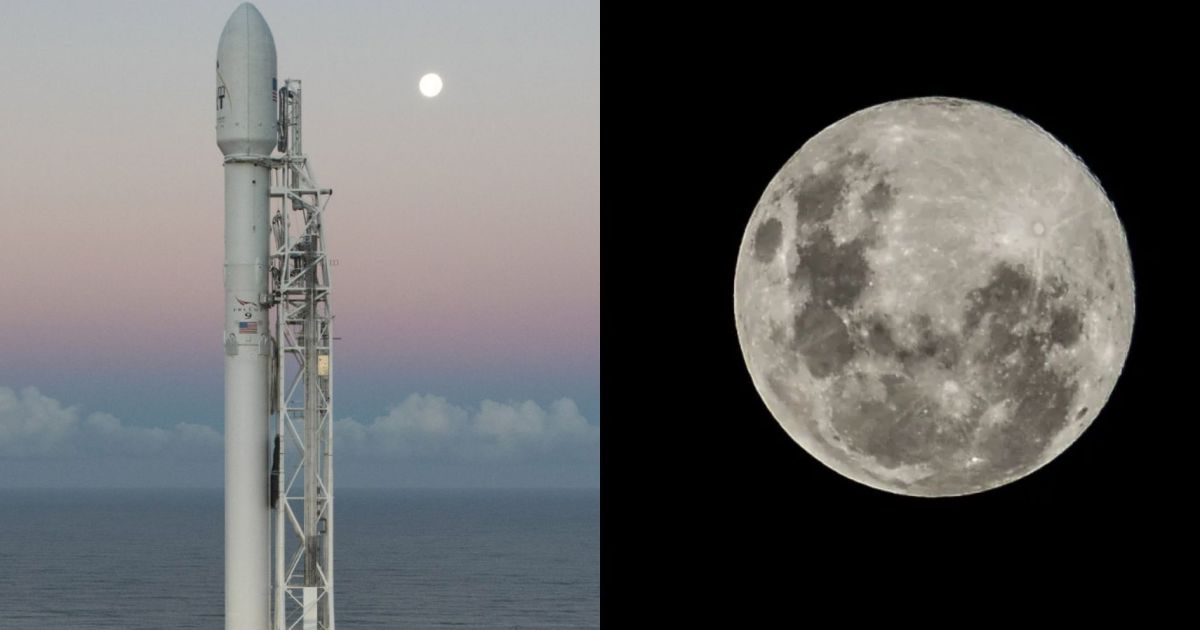
A discarded upper stage of a SpaceX Falcon 9 rocket is expected to hit the surface of the Moon at 3:35:37 a.m. Brasília time on Wednesday (5). Identified as 2025-010D, the stage weighs approximately four tons and is moving at 2.43 kilometers per second, or nearly 8,700 kilometers per hour.
The impact will occur near Einstein crater, along the illuminated limb of the Moon, with a margin of error of just seconds and a few kilometers of uncertainty. Scientific models based on the rocket's mass and orientation indicate the collision could open a new crater dozens of meters wide.
According to Urânia Planetário, the flash caused by the collision may last less than a second, but its brightness intensity is unpredictable. Because the region will be illuminated by the Sun, reduced contrast will not allow observation with the naked eye. Viewers can attempt to watch the moment using a telescope and a camera capable of recording at high speed.
Dust plume formation and viewing conditions
Researchers are also monitoring the potential formation of a dust and fragment plume. Based on simulation results, scientists estimate the plume could reach between 15 and 20 kilometers high, while a narrower central structure could reach dozens of kilometers.
The location of the dust plume, near the lunar limb, could be viewed in contrast with the dark background of space. However, observations released on Tuesday (4) indicated that the calculated point shifted slightly to a more hidden region on the edge of the Moon, which could alter viewing from Earth.

Impact safety and effects on the Moon
The collision poses no danger to Earth and will not cause noticeable changes to the orbit of the Moon. The crash will only form craters, move lunar dust, and create future risks involving space debris.



